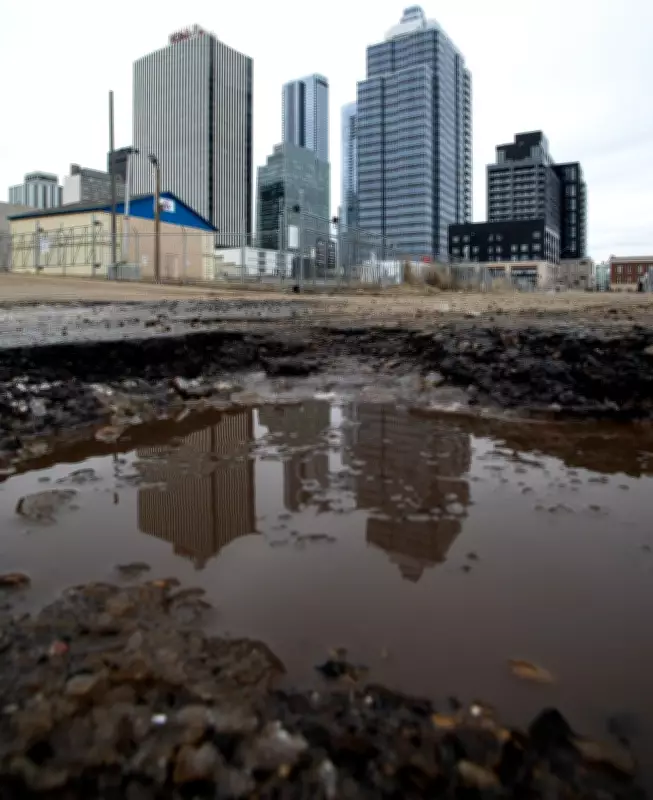
As Canadian astronaut Jeremy Hansen completes his lunar journey, Edmonton drivers are navigating a crater-filled landscape of their own. Following the fifth heaviest snowfall on record and volatile winter temperatures, the city's 12,000 kilometres of roadways now resemble Swiss cheese, dotted with potholes that challenge even the most seasoned motorists.
Winter's Aftermath: A Pothole Epidemic
With winter finally receding, Edmonton faces an unforgiving terrain of suspension-snapping chasms. City officials confirm they've already begun addressing these roadway hazards, but the scale of the problem is substantial. To date, municipal crews have filled 40,994 potholes while receiving 4,831 notifications through the city's 311 reporting system.
Weather Complications and Repair Challenges
"As a northern city, we experience frequent freeze-thaw cycles that significantly impact our road infrastructure, leading to the formation of potholes," explained Matthew Mohr, Infrastructure Maintenance general supervisor. "This season, multiple precipitation events have impacted repair efforts, as snow and wet conditions make effective pothole repair more difficult."

Recurring heavy snowfalls have forced crews to repeatedly shift from pothole repairs back to snow removal operations, slowing the pace of filling these roadway divots. The freeze-thaw cycles—where moisture expands and contracts within pavement—continue to create additional infrastructure issues even as repairs progress.
Repair Strategy and Prioritization
As snow melts, Edmonton is deploying five dedicated teams to address the most critical potholes from March through June. Once street sweeping concludes, these crews will be bolstered to 15 teams working throughout the summer months. The city prioritizes repairs based on several factors:
- Deepest fissures that pose immediate safety risks
- Potholes located directly in traffic paths
- Major roadway locations
- All potholes reported through the 311 system
Reporting and Response Timelines
Edmonton encourages residents to report potholes by calling 311, using the 311 app, or visiting the Report a Pothole webpage. Response times vary based on severity:
- High priority cases: Inspection within two days, repair within ten days
- Lower priority locations: Inspection within five days, repair within one month
- Alleyways: Inspection within two weeks, repair within one year
Mohr cautions that these are target timelines, and factors ranging from adverse weather to budget considerations can affect repair schedules. The dramatic increase in pothole complaints—over 4,300 calls to 311 last year compared to significantly fewer the previous year—highlights the growing challenge.
Historical Context and Future Outlook
Last year saw a tenfold increase in pothole complaints, with over 50,000 filled in 2025 alone. This represents a substantial jump from previous years and underscores the cumulative effect of harsh winter conditions on municipal infrastructure. As crews work through the summer months, they race against the calendar before winter returns and the cycle begins anew.
The city's approach combines proactive maintenance with responsive repairs, but the fundamental challenge remains: Edmonton's northern climate ensures that potholes will continue to be an annual battle for both drivers and municipal workers alike.