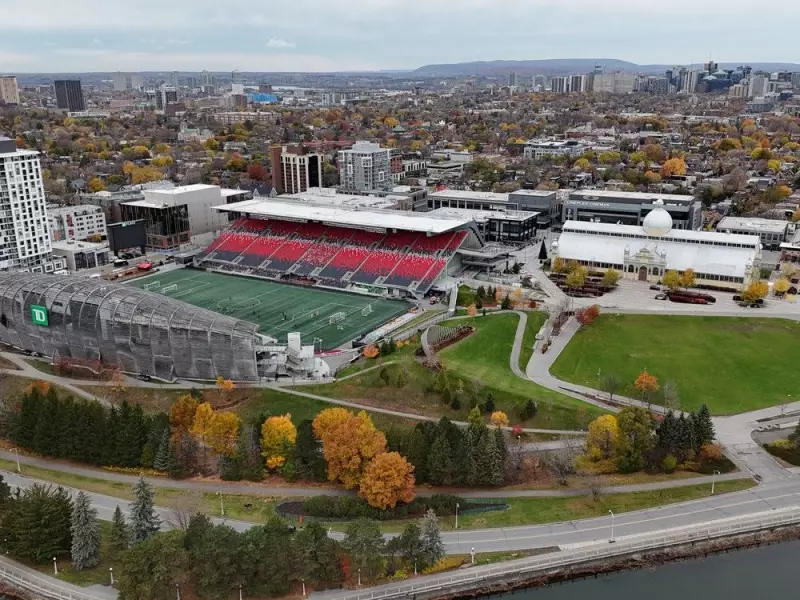
Ottawa city council has delivered what supporters are calling a victory for common sense by approving the contentious Lansdowne 2.0 redevelopment plan. The decision represents a significant win for Mayor Mark Sutcliffe's measured approach to one of the city's most debated municipal issues.
Council Backs Logical Solution for Aging Facilities
The $418.8 million project will see the replacement of the north side stands at TD Place Stadium and the demolition of the problematic Civic Centre, both original structures dating back to 1967. After extensive debate, council members ultimately supported moving forward with the comprehensive redevelopment plan despite opposition from some community critics and councillors.
The approved plan addresses the city's aging sports and entertainment facilities through a partnership with Ottawa Sports and Entertainment Group (OSEG). This collaborative approach aims to offset project costs through increased revenue generation from the revitalized site, rather than placing the entire financial burden on taxpayers.

Addressing Criticism and Assessing Alternatives
Opponents of Lansdowne 2.0 had raised concerns about the project's cost, potential risks, and whether the money could be better allocated to other municipal priorities. However, their arguments failed to gain sufficient traction during council deliberations.
Critics struggled to present a viable alternative to the city's proposed solution. The options were essentially limited to three approaches: temporary patches to deteriorating structures that would eventually require replacement at higher cost, complete public funding through tax increases, or the approved public-private partnership model.
The city has secured a fixed-price construction contract of $313 million for the core components of the project. Three separate bidders submitted proposals within a few million dollars of this figure, indicating the budget represents a realistic market assessment.
Financial Safeguards and Revenue Projections
To address potential cost overruns, the city has established a 10 percent contingency fund. Council further strengthened this financial buffer during their November meeting by allocating additional funds from hotel room tax revenue.
While projecting revenue streams over the project's 40-year debt term presents challenges, even conservative estimates suggest the partnership approach will generate more revenue than the city would realize by funding the project entirely through public means. As supporters noted, without the revenue-sharing arrangement with OSEG, the $418.8 million funding package simply wouldn't exist.
The Lansdowne 2.0 approval marks a pivotal moment for Ottawa's urban development, ensuring the future of key municipal facilities while attempting to balance fiscal responsibility with necessary infrastructure investment.