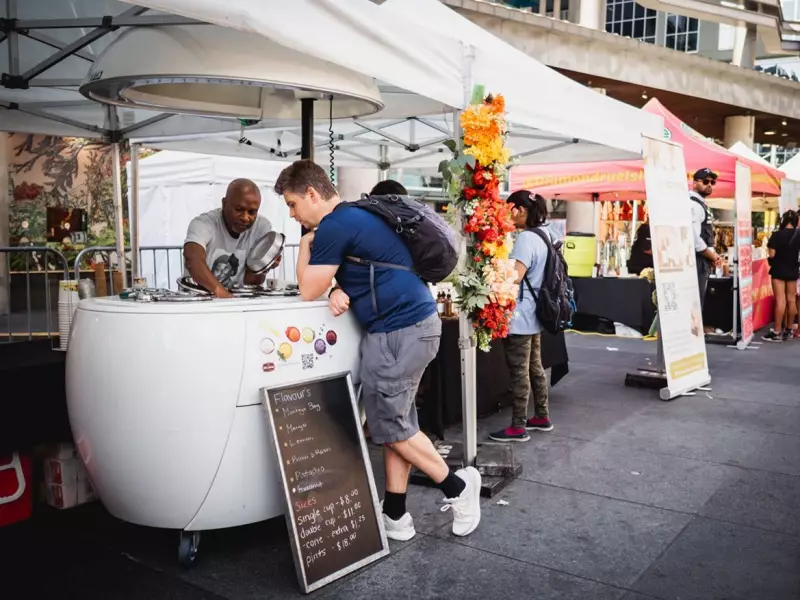
Toronto's high-profile public plaza is facing a severe financial crisis following its controversial name change, with new city budget documents revealing massive losses and a dramatic drop in event bookings.
Financial Freefall Post-Rebrand
Official figures from the City of Toronto's 2026 budget process paint a stark picture for Sankofa Square, the downtown event space formerly known as Yonge-Dundas Square. In 2025, the first full year operating under its new name—a Ghanaian word meaning "to go back and get it"—the square saw revenues collapse while expenditures remained high.
The budget shows the plaza generated just under $2 million in revenue against $3.5 million in expenditures, resulting in a net loss of $1.5 million to Toronto taxpayers for the year. Projections indicate similar losses of $1.5 million annually for 2026, 2027, and 2028.

Key revenue streams suffered catastrophic declines. Permit revenue fell from $275,000 in 2024 to a projected $87,000 for 2025—the lowest level since the pandemic year of 2021 when only five event days were booked. Digital advertising revenue dropped by more than a quarter, from $826,000 to $600,000. Even commissions from sightseeing tours were halved, from $300,000 to $200,000.
Event Planners Vote With Their Feet
The core of the financial trouble appears to be a wholesale abandonment by commercial event organizers. According to the budget document, commercial event days plummeted from 71 in 2024 to just 22 in 2025.
This collapse forced square management to take extraordinary measures. To create activity, they waived all permit fees for community and non-profit groups and self-produced 55 days of a "Melanin Market" program featuring Black artists and vendors. Despite these efforts, total event days fell from 171 in 2024 to 127 in 2025—far short of the "365 days a year" vision promoted by local Councillor Chris Moise, who championed the rebrand.
Internal survey data from Sankofa Square management, buried in a January 2025 report, suggests event producers themselves are unconvinced by the change. When asked how well the new brand would "support and align with" their next event, only 3 of 39 specialists polled said "excellent" and 9 said "good." Strikingly, 15 of the 39 respondents skipped the question entirely.
Official Explanations Versus Public Sentiment
The city's budget document primarily attributes the financial woes to U.S. tariffs reducing brand promotions and commercial activations. However, this explanation conflicts with both public opinion polling and the square's own operational data.
A 2024 poll found that more than 70% of respondents disapproved of the renaming. Furthermore, the square's management previously admitted that the $300,000 allocated for the rebrand—from Section 37 funds designated for public space improvements—could have been spent on "security by environmental design" to address safety concerns.
The budget document notes the square saw "over 40 protests and rallies" in 2025 and has since hired a "manager of community safety." It also reveals that sponsorship and digital signage revenue is now projected to be negative $103,500 for 2026, a remarkable reversal for what was intended to be a revenue-generating asset.
The financial troubles come amid leadership changes. Julian Sleath, the square's general manager who participated in the renaming project, departed in December 2025. The current budget document bears the name of his interim replacement, Marnie Grona.
As Toronto's budget process moves forward, the ongoing losses at Sankofa Square present a continuing challenge for city finances and raise questions about the long-term viability of a high-profile public space that has struggled to find its footing after a controversial identity change.