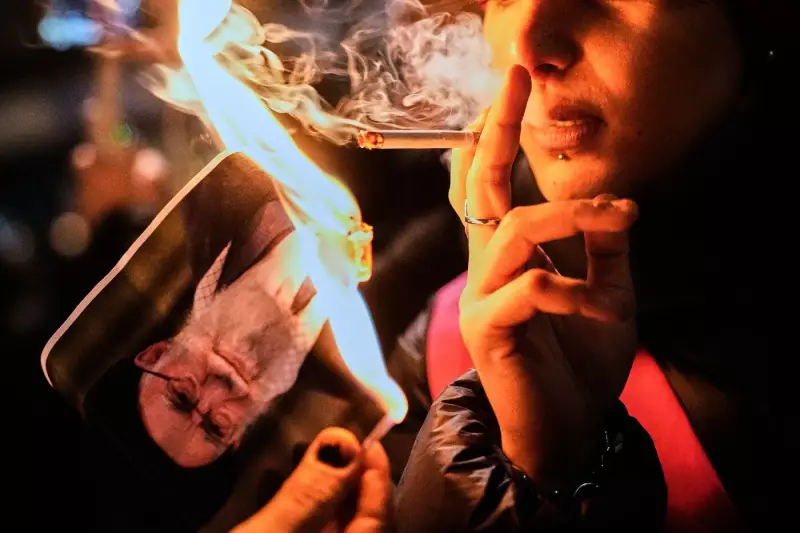
A single, defiant act at a demonstration in Berlin has resonated globally, transforming an anonymous protester into a potent symbol of resistance for those opposing Iran's government. The moment, captured in a striking photograph, involved a woman setting fire to a portrait of Iran's Supreme Leader and then using that flame to light her cigarette.
A Defiant Gesture Captured in Berlin
The event took place on Wednesday, January 14, 2026, during a rally in the German capital. The gathering was held in solidarity with the ongoing nationwide mass protests within Iran. Photographer Ebrahim Noroozi of The Associated Press documented the scene as a female protester held a poster bearing the image of Supreme Leader Ayatollah Ali Khamenei.
In a deliberate and symbolic gesture, she set the photo alight. As the image burned, she then leaned forward, touching the tip of her cigarette to the flames. This act of using the leader's effigy as a mere source of fire was a profound display of contempt and rebellion.

The Power of Symbolic Resistance
While the woman's identity remains unknown, her action has transcended the Berlin protest. The photograph has been widely circulated, with many interpreting it as a metaphor for the spirit of the protest movement within Iran. It visually communicates a rejection of the current leadership's authority and a reclaiming of personal agency.
The demonstration itself was one of many held internationally, reflecting global concern and support for the Iranian people. The protests inside Iran, which the Berlin event aimed to support, have been described as some of the most significant and widespread in recent years.
Context of Widespread Unrest
The act in Berlin did not occur in a vacuum. It was a direct response to the sustained and often brutally suppressed protests inside Iran. These domestic demonstrations have mobilized citizens from various segments of society, voicing demands for political and social change.
The symbolic burning in Germany serves as a stark reminder that the internal conflict in Iran has captured international attention and inspired acts of solidarity worldwide. It underscores how local acts of protest can evolve into universal symbols for a cause.
The image, distributed by The Associated Press on January 16, 2026, continues to gain traction. It stands as a powerful, silent testament to the emotions driving the opposition movement—a blend of anger, defiance, and a bold statement of resistance that has found its emblem in a simple, yet profoundly provocative, act.