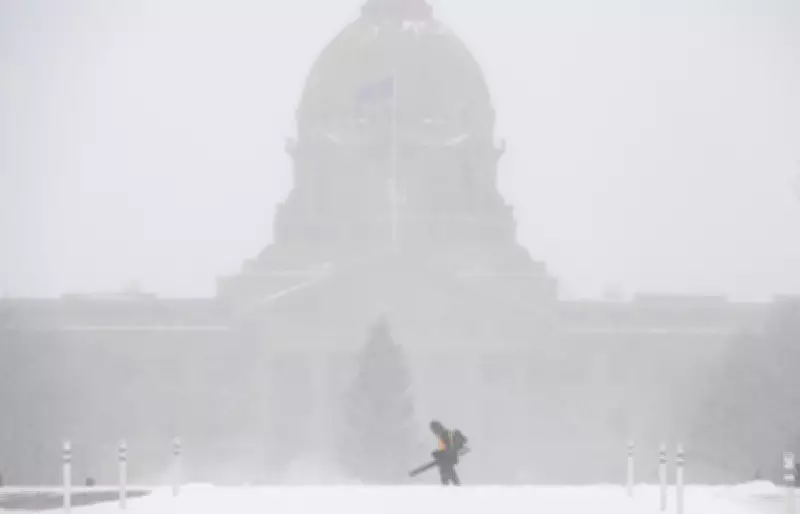
A political expert has issued a stark warning about the state of affairs in Alberta, describing the province's current situation as "a much more complex problem" than many realize. This analysis comes amid a backdrop of diverse news stories from across Canada, but the focus remains sharply on Alberta's unique political and social landscape.
The Depth of Alberta's Political Landscape
The expert's comments suggest that Alberta is grappling with issues that are deeply interconnected and resistant to simple fixes. Unlike straightforward policy matters, the province's challenges involve a web of economic, social, and environmental factors that require nuanced understanding and comprehensive strategies. This complexity is evident when considering Alberta's role in Canada's energy sector, its demographic shifts, and its political dynamics within the federation.
Interconnected Challenges Facing the Province
Alberta's economy, heavily reliant on natural resources like oil and gas, faces pressures from global market fluctuations and environmental policies. Simultaneously, the province must address healthcare demands, educational needs, and infrastructure development. The political expert points out that these areas are not isolated; decisions in one domain inevitably impact others, creating a tangled scenario that defies easy resolution.

For instance, efforts to transition toward renewable energy must balance economic stability for workers in traditional industries, while also considering environmental sustainability and technological innovation. This multifaceted approach is crucial, as highlighted by the expert's emphasis on complexity.
Broader Context of Canadian News
While Alberta's situation is under scrutiny, other news items from across Canada provide a contrasting backdrop. Stories range from a major drug bust in Prince Albert, where over 152 grams of fentanyl were seized, to federal funding for Inuit-led university initiatives. In sports, the U.S. defeating Canada 2-1 in overtime for Olympic gold has captured national attention, and in entertainment, William Shatner's return to Calgary Expo adds a cultural dimension.
However, the political expert's analysis brings the focus back to Alberta, suggesting that such diverse events reflect the broader, intricate nature of Canadian society, where local and national issues often intersect in unpredictable ways.
Implications for Policy and Governance
The expert's warning implies that policymakers in Alberta must adopt a holistic view, avoiding piecemeal solutions that might address symptoms rather than root causes. This could involve:
- Engaging in cross-sector collaboration to tackle economic and environmental issues simultaneously.
- Investing in research and data analysis to better understand the interdependencies within the province's challenges.
- Fostering public dialogue to build consensus around complex, long-term strategies.
By recognizing the complexity, Alberta can move toward more effective and sustainable governance, as the expert advises. This perspective is vital in a time when quick fixes are often sought but rarely suffice for deep-seated problems.
Conclusion: Navigating Complexity in Alberta
In summary, the political expert's characterization of Alberta's challenges as "a much more complex problem" serves as a crucial reminder of the need for thoughtful, integrated approaches. As the province continues to evolve within Canada's diverse landscape, acknowledging this complexity may be the first step toward meaningful progress and resilience in the face of multifaceted issues.