Doug Ford Adds Voice to Critics of Federal Gun Buyback Plan
Ontario Premier Doug Ford has publicly denounced the federal government's firearm "buyback" program, aligning himself with a growing list of political leaders and law enforcement agencies across Canada who argue the initiative fails to address core public safety issues. His remarks follow closely on the heels of statements from the country's largest police force, which also declared it would not take part in the program.
Federal Program Faces Widespread Rejection
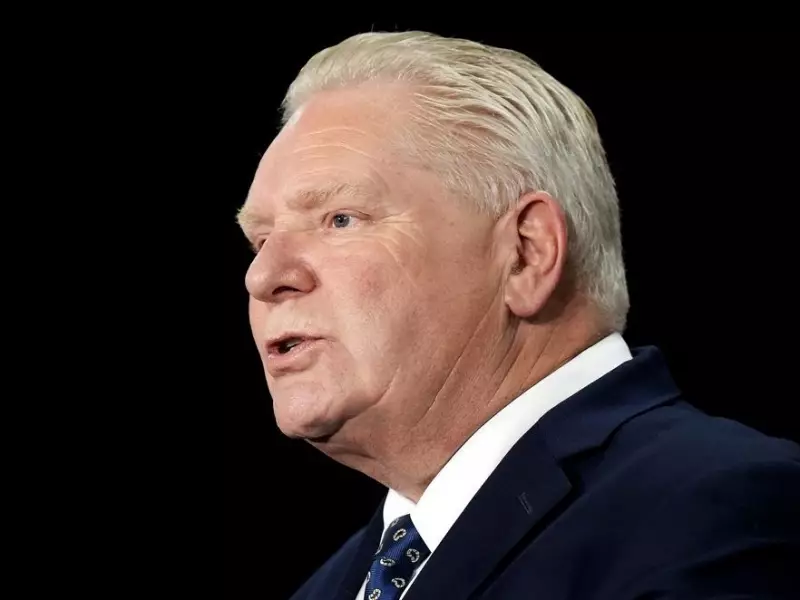
Federal Public Safety Minister Gary Anandasangaree unveiled details of the gun buyback scheme over the weekend, but despite enthusiastic support from Liberal officials, the program appears to be encountering significant resistance. Premier Ford expressed his skepticism in an impromptu address to reporters at Queen's Park, emphasizing that the focus should be on criminal activity rather than licensed gun owners.
"I've never, ever once heard someone come up to me and say, you know those law-abiding hunters, let's go take their guns. I've never heard that. What I hear a dozen times a day, no matter where I go, is 'I feel unsafe,'" Ford stated, highlighting the daily concerns voiced by Ontario residents regarding public safety.

Police Forces Decline Participation
The Ontario Provincial Police have confirmed they will not assist in collecting firearms for the federal initiative, and so far, no municipal police forces in the province have agreed to participate. This stance is echoed by the Toronto Police Service, the largest police force in Canada, which issued a statement clarifying its position.
"We must focus our efforts where they have the greatest public safety impact, including targeting criminals who use illegal firearms, particularly those entering Canada from the United States," said TPS spokesperson Stephanie Sayer. Police officials noted that while they were invited to join the program, no "operationally viable plan" was presented to them.
Other Provincial Leaders Voice Concerns
Ford's criticism places him alongside premiers from Alberta, Saskatchewan, and Manitoba, who have also expressed doubts about the program's effectiveness. Unlike Alberta Premier Danielle Smith and Saskatchewan's Scott Moe, Ford is not pursuing legislative measures to block the federal initiative, but he unequivocally refuses to support it.
Manitoba Premier Wab Kinew echoed similar sentiments, explaining that his government will not participate despite financial incentives from Ottawa. "This is a federal government program that doesn't appear to be very efficient, doesn't appear to be well run. And so, for us looking at that, why would we want to take on that whole headache?" Kinew remarked, questioning the program's potential to reduce violent crime.
Program's Limited Reach and Questionable Efficacy
With Quebec standing as the only substantial provincial partner for the Carney government on this issue, and Anandasangaree acknowledging that the program will not be fully operational in Alberta and Saskatchewan, doubts arise about its national scope. A pilot project in Cape Breton yielded minimal results, collecting only 25 guns from 16 individuals, raising further questions about the program's overall success.
Critics argue that the nearly $750 million allocated to the buyback program could be better spent on measures that directly enhance public safety, such as bail reform and stricter penalties for gun-related offenses. Ford urged the federal government to prioritize these areas instead of targeting licensed firearm owners.
"Start focusing on the bad guys, not on the good guys, the bad guys. You're missing the whole point on that. I support legal gun owners and hunters because they're responsible," Ford emphasized, reinforcing his commitment to addressing crime at its source rather than through what he views as a misguided policy.