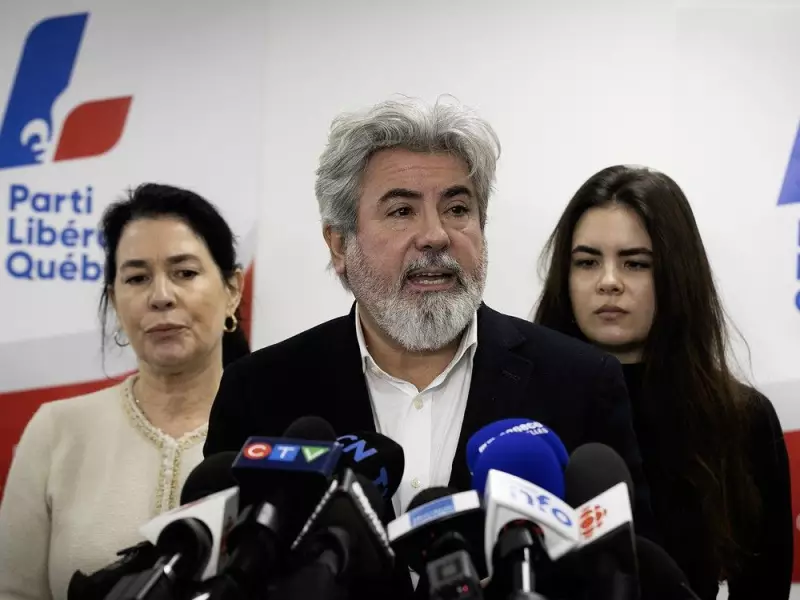
The Quebec Liberal Party enters the holiday season facing a profound leadership vacuum, yet with a rare political opportunity for renewal. Leader Pablo Rodriguez formally resigned on Thursday, December 18, 2025, following a month of escalating scandals related to his 2024 leadership campaign. His departure, on the eve of a critical election year, forces the party into a swift reset.
A Crisis Contained and a Necessary Exit
Rodriguez’s resignation concludes a turbulent period where the party was forced to confront allegations of shady campaign financing practices. The controversies evoked unwelcome memories of past corruption scandals investigated by the Charbonneau Commission and UPAC, Quebec's anti-corruption unit.
While Rodriguez maintained he was not personally implicated in the most serious allegations—including text messages discussing paying voters with "brownies" (slang for $100 bills) and a businessman's independent scheme to reimburse donors—he acknowledged his role had become a distraction. He also conceded to an error in judgment regarding a $20,000 payment to his wife's law firm for use of its boardroom during the campaign.

"He did the right thing in stepping aside," writes analyst Allison Hanes. "The party is bigger than one man." By falling on his sword, Rodriguez has effectively contained the ethical fallout to his leadership campaign, shielding the broader party apparatus from deeper contamination as it looks toward the next election.
Timing May Be a Blessing in Disguise
Political observers suggest the timing of this crisis, while damaging, could ultimately benefit the Quebec Liberals. The provincial election is scheduled for fall 2026, providing a narrow but viable window for a complete reboot.
"If this 'fling flang' had hit the fan closer to or during the election campaign, the Liberals would have been cooked," the analysis notes. The party now has a chance to address its internal divisions and select a new standard-bearer with almost a full year to introduce them to the electorate.
The federal Liberal Party's recent experience serves as a potential blueprint. Last year, following Chrystia Freeland's departure and Justin Trudeau's resignation, the party selected former Bank of Canada governor Mark Carney, who led them to a minority government victory by April. The Quebec Liberals, having triggered their leadership process earlier in the electoral cycle, are arguably a few steps ahead of where their federal cousins were.
Questions That Plagued Rodriguez's Brief Tenure
Rodriguez's six-month leadership was marked by several inherent challenges:
- Federalist Pedigree: As a former federal Liberal cabinet minister and Justin Trudeau's Quebec lieutenant, his Ottawa connections were a double-edged sword. In an election expected to focus on countering the sovereigntist Parti Québécois, some questioned if he possessed the necessary nationalist sensibility to appeal to francophone voters outside Montreal.
- Low Visibility: Without a seat in the National Assembly, Rodriguez's public profile remained low. Day-to-day parliamentary duties were handled by parliamentary leader Marwah Rizqy, who has since been expelled from caucus after firing Rodriguez's chief of staff.
- Crisis Management: The recent scandal provided Quebecers with a glimpse of Rodriguez's crisis management skills, which were widely perceived as lacking and ultimately cost him the support of the party rank and file.
The Path Forward: A Steep but Open Race
The Christmas break offers a moment for the dust to settle. When the political world reconvenes in the new year, the Quebec Liberal Party will need to launch an open, transparent, and expedited leadership contest.
Potential contenders from the previous race may re-emerge, including:

- Charles Milliard, former president of the Fédération des chambres de commerce du Québec, who placed second.
- Karl Blackburn, former junior minister and ex-head of the Conseil du patronat, who came third.
The party faces a formidable opponent in the Parti Québécois, which currently leads in opinion polls and is promising a referendum many Quebecers do not want. The task for the next Liberal leader will be to present a compelling federalist alternative and reconnect with Monsieur et Madame Tout-le-Monde.
"The path forward is steep, but it is not insurmountable," concludes the analysis. Rodriguez's resignation, while a blow, has handed the Quebec Liberals a precious political do-over. Whether they can capitalize on this chance for a renaissance before the 2026 vote remains the defining question for Canada's oldest political party in Quebec.