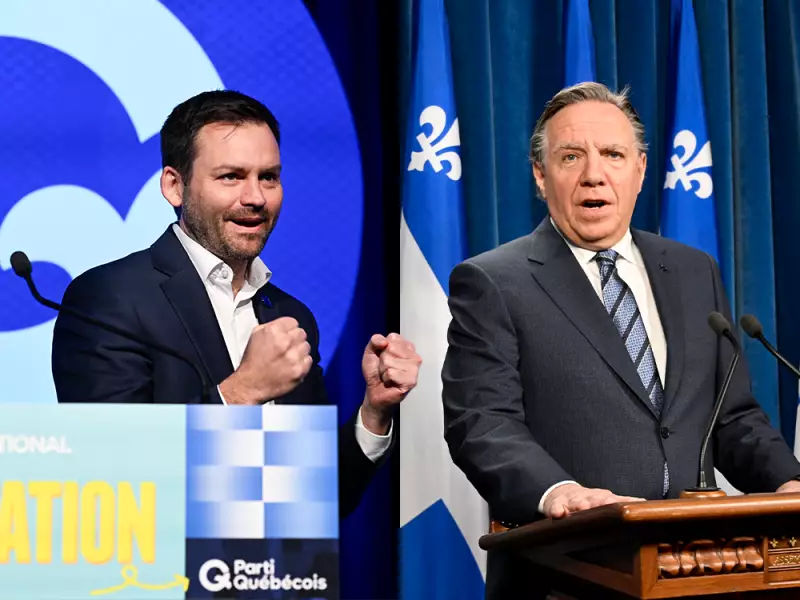
The leader of the Parti Québécois has declared the political project of outgoing Premier François Legault a definitive failure, framing his resignation as the end of a significant chapter in Quebec's history.
End of an Era and a Failed Vision
In his first public comments since Legault announced his departure on Wednesday, PQ Leader Paul St-Pierre Plamondon stated on Friday that the premier's exit signals the conclusion of a political era. He pronounced the "total failure" of what he termed Legault's "third-way" option—a nationalist stance attempting to chart a course between federalism and full independence for Quebec within Canada.
St-Pierre Plamondon, speaking at a news conference at the legislature in Quebec City, did not fault Legault for his attempt. "I do not blame Legault for trying to move Quebec forward in Canada with his plan," he conceded. However, he was unequivocal in his assessment of the results. "There is no possible third way in Canada," he asserted. "It’s either the status quo with the decline which goes with it, or independence. This is the political heritage Legault leaves us with."

No Shift in PQ Strategy Despite Leadership Change
Despite the impending exit of his main political rival, the PQ leader insisted his party's course remains unchanged. "We are not in politics to play tactics in reaction to which adversary is in front of us," St-Pierre Plamondon said. "We are in politics in the interest of the public. So, there will be no change in strategy or style."
He expressed confidence that Quebecers would draw their own conclusions from Legault's tenure, which began in 2018. He pointed to the Coalition Avenir Québec government's initial request for powers from Ottawa over 21 areas, noting they achieved none. "In good faith, they tried their third way. They hit the wall in trying to make gains in Canada," he stated, adding that changing the CAQ's leader would not alter the fundamental reality.
Sovereignty Debate Deemed More Relevant Than Ever
Far from sidelining the question of Quebec's political future, St-Pierre Plamondon argued that Legault's experience has made the independence debate more urgent. "If François Legault wanted to show the need to shelve the debate on sovereignty, well he has showed the necessity to have this debate," he contended. He framed the issue as one of national survival, suggesting the CAQ's lack of success in negotiating new powers from the federal government proves the limitations of the status quo.
Looking ahead, the PQ leader predicted the coming CAQ leadership race would cause significant disorganization within the government. He reiterated a previous prediction of a potential snap election in the spring of 2026, as soon as a new leader is chosen, despite the province's fixed-date election law currently scheduling the next vote for October 2026.
When asked about the future of Legault's CAQ party, St-Pierre Plamondon declined to speculate, noting only that the "nationalism-without-separation" option predates Legault. "It takes a general election to answer this question," he concluded, setting the stage for the next political battle in Quebec.