Premier François Legault's announcement that he will not seek a third term brings to a close a political era that profoundly reshaped the linguistic landscape for Quebec's English-speaking minority. His rise to power in 2018 with the Coalition Avenir Québec (CAQ) ended what many describe as decades of relative linguistic calm for the province's million-plus anglophones, ushering in a period of significant legal upheaval and introspection.
A Sweeping Overhaul of Language Laws
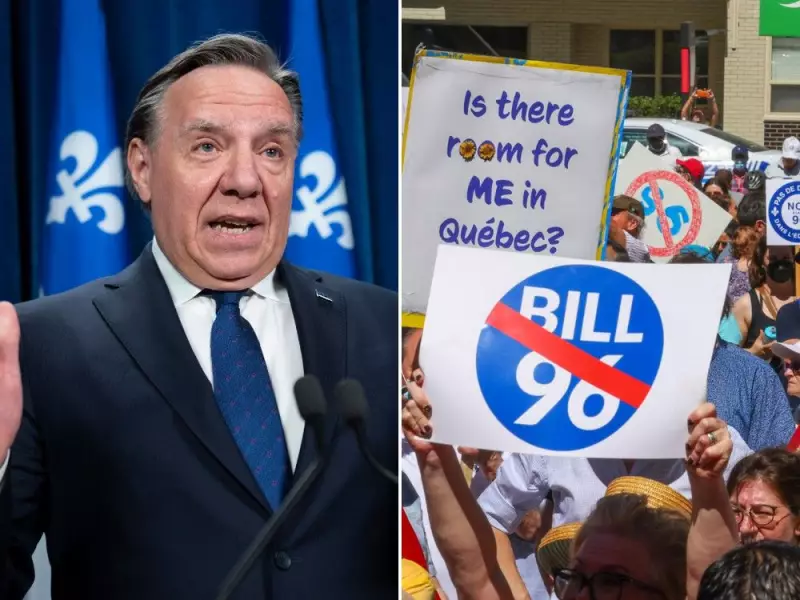
Driven by growing francophone concern for the future of French, Legault's government embarked on the most substantial revision of Quebec's language laws since the original Charter of the French Language (Bill 101) in 1977. The centerpiece of this effort was Bill 96, enacted in 2022, which touched virtually every aspect of public life.
The law imposed stricter French requirements in businesses and courts, tightened rules on commercial signage and product packaging, and changed access to government services in English. It also significantly impacted the education sector, applying new French exit exams and enrollment caps to English-language CEGEPs. Furthermore, the CAQ moved to eliminate elected English school boards and introduced tuition changes that disproportionately affected English universities, notably McGill and Concordia.

Broken Promises and Deepening Divides
Before taking office, Legault actively courted anglophone voters, positioning the CAQ as a safe alternative to the traditional Liberal party. In 2015, the party's platform promised "tolerance and respect" towards the English-speaking minority and stated it had "no intention of challenging" their special rights—a passage later removed. During the 2018 campaign, Legault pledged never to hold a sovereignty referendum, focusing instead on autonomy within Canada.
However, once in power, his government's actions fostered deep skepticism. Beyond language, Bill 21, the secularism law banning certain public servants from wearing religious symbols, alienated many in the more multicultural anglophone community. His recent push for a Quebec constitution sparked fears it could dilute historic English-language rights. Legault's frequent use of the constitutional notwithstanding clause to shield laws from challenges reinforced a sense that Quebec was charting a separate path.
A Community Feeling More Isolated
The cumulative effect of these policies has left many anglophones feeling more isolated. A 2023 poll revealed that a majority of francophones see English and anglophones as peripheral to Quebec's identity, with only 17% of francophones supporting a party that defends English-language rights. With the CAQ itself lamenting the amount of English heard on Montreal streets, the social and political climate has shifted.
As Legault departs, the question of whether anglophones will miss him is largely rhetorical. The political horizon now features a resurgent Parti Québécois under Paul St-Pierre Plamondon, who has vowed to hold a referendum on sovereignty by 2030 if elected in October—reviving the very prospect Legault once promised to avoid. For Quebec's anglophones, the era of linguistic calm has given way to a future of continued uncertainty and legal battles over their place in la belle province.