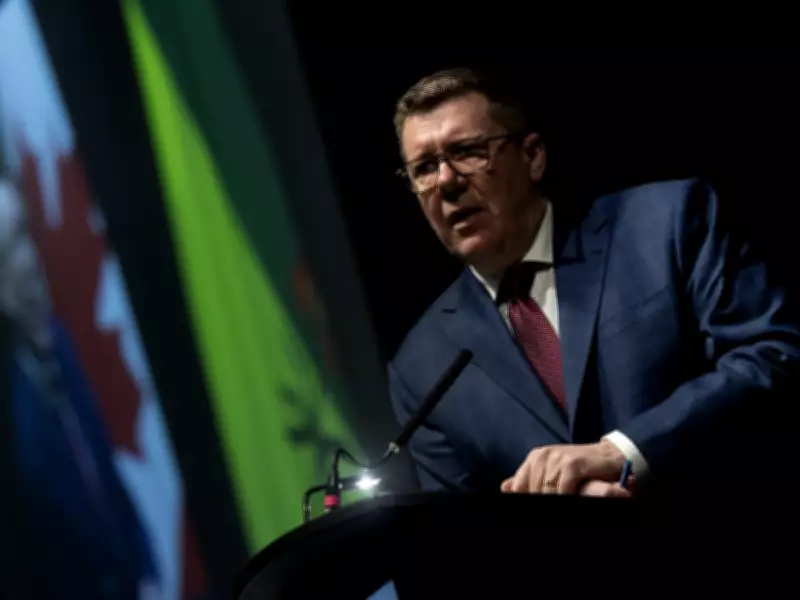
In a significant pre-budget announcement, the Saskatchewan government has revealed that municipalities will receive a record-breaking $392.4 million through Municipal Revenue Sharing (MRS) for the 2026-27 fiscal year. This allocation represents an eight percent increase over the previous year's funding and marks the highest amount ever distributed through this program since its establishment.
Unprecedented Funding Commitment
Minister of Government Relations Eric Schmalz confirmed the substantial funding increase last week, highlighting the government's commitment to supporting local governments across the province. The $392.4 million pool represents a $30.7 million increase from the $361.8 million distributed in 2025-26, demonstrating significant growth in provincial support for municipal operations.
Premier Scott Moe emphasized that despite facing a looming provincial deficit and volatile oil prices, the government will not reduce funding to this unique-in-Canada program. "We're going to abide by the formula," Moe told reporters, "because the same pressures we're feeling at the provincial level are being felt at the national level and at the municipal level."

How the Funding Model Works
Saskatchewan's revenue-sharing model, established in 2006 and first delivered in 2007-08, provides municipalities with three-quarters of a percentage of provincial sales tax revenue through no-strings-attached grants. This innovative approach allows local governments to allocate funds according to their specific needs and priorities without provincial restrictions.
The funding formula directly links municipal grants to the province's economic performance, meaning allocations vary annually based on economic conditions. Grants are calculated on a per-capita basis using census figures, which will be updated with the upcoming 2026 census data to ensure accurate distribution.
Municipal Needs and Advocacy
Municipalities utilize these grants to support essential services including infrastructure maintenance, operational costs, and community development projects. The increased funding comes at a critical time for many communities facing financial pressures.
Following Regina's implementation of its largest-ever tax increase this year, Mayor Chad Bachynski has expressed intentions to lobby for additional provincial funding to help limit future tax increases for residents. The record revenue sharing announcement represents a positive response to such municipal advocacy efforts.
Distribution Breakdown and Allocation
While the government will provide detailed breakdowns of individual municipality allocations later today when the budget is officially tabled, historical distribution patterns offer insight into how funds are typically allocated. In the previous year, 47.9 percent of MRS grants went to cities, 16.2 percent to towns, villages and resort villages, 28.5 percent to rural municipalities, and 7.4 percent to northern communities.
The upcoming detailed allocation will specify amounts for major urban centers including Regina and Saskatoon, along with funding for smaller municipalities throughout the province. This transparency allows communities to plan their budgets with certainty about provincial support levels.
Economic Context and Future Implications
The record municipal revenue sharing commitment occurs against a backdrop of economic uncertainty, with the province navigating deficit challenges while maintaining support for local governments. The program's design ensures that as provincial revenues grow through sales tax collection, municipal funding automatically increases proportionally.
This announcement represents one of the few budget teasers released ahead of the full 2026-27 provincial budget presentation, signaling the government's priority on municipal partnerships. The sustained commitment to revenue sharing despite fiscal pressures demonstrates the program's importance in Saskatchewan's governance structure and intergovernmental relations.