Alberta Premier Firmly Rejects U.S. Statehood Proposal
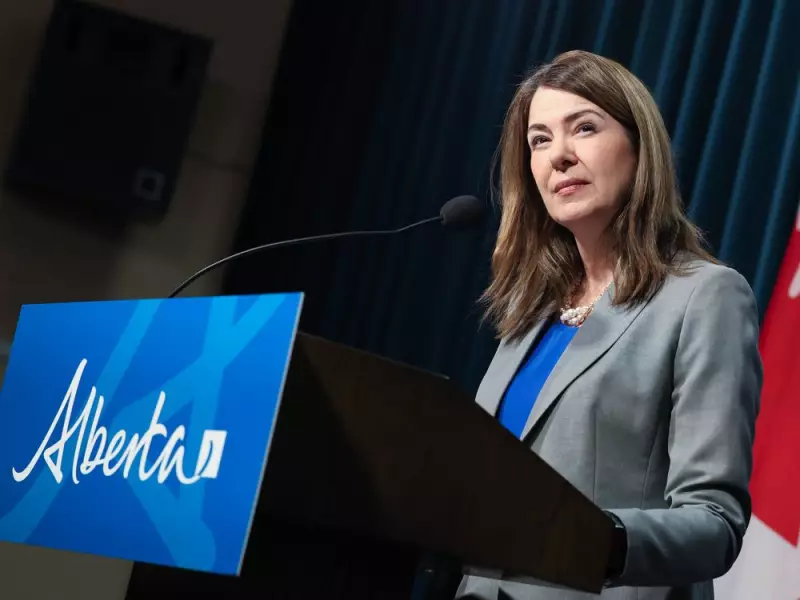
Alberta Premier Danielle Smith has made it clear through her office that residents of her province would overwhelmingly reject any notion of joining the United States as a state. This statement comes as a direct response to recent comments from U.S. Treasury Secretary Scott Bessent, who suggested Alberta might be a natural partner for the United States.
Official Response to U.S. Treasury Secretary's Comments
Sam Blackett, press secretary for Premier Smith, stated in an official email that "the overwhelming majority of Albertans are not interested" in pursuing statehood with the United States. Blackett emphasized that "the Premier supports a strong and sovereign Alberta within a united Canada."
This response follows Bessent's appearance in a broadcast interview last week where he described Alberta as a "natural partner" for the United States. The U.S. Treasury Secretary specifically mentioned Alberta's significant resources and independent-minded population, while also referencing rumors about a potential independence referendum.

Growing Separatist Movement in Alberta
Meanwhile, separatist activists in Alberta have initiated a petition calling for a referendum on independence from Canada. This movement has gained momentum partly due to frustrations with the federal government in Ottawa, which activists believe has not done enough to support oil production expansion projects, including new pipeline construction.
The separatist sentiment persists despite Prime Minister Mark Carney's November pledge that his government would support a new pipeline to the British Columbia coast with potential capacity of 1 million barrels per day. Alberta remains crucial to Canada's energy sector, accounting for approximately 85 percent of the country's oil production.
Alberta's Energy Infrastructure Challenges
Canada stands as the world's fourth-largest oil producer, with Alberta at the center of this industry. However, the province faces significant infrastructure limitations:
- The majority of Alberta's oil production is exported to the United States through pipelines running through the Midwest region
- Only one pipeline, the Trans Mountain Pipeline, runs through Canada to an ocean port
- The federal government purchased and expanded the Trans Mountain Pipeline at a cost exceeding $30 billion
Bessent's comments specifically addressed these infrastructure challenges, suggesting that Alberta should be allowed to expand oil shipments through the United States. He noted that "people want sovereignty" and desire what the United States has achieved in terms of energy infrastructure and economic independence.
Political Context and Implications
The exchange between Alberta's leadership and the U.S. Treasury Secretary highlights ongoing tensions between provincial and federal governments regarding energy policy and sovereignty. While separatist movements continue to advocate for Alberta independence, Premier Smith's office maintains a position supporting Alberta's place within a united Canada, albeit with stronger provincial sovereignty.
This development comes at a time when Alberta continues to navigate complex relationships with both the federal government and international partners, particularly regarding energy exports and environmental policies. The province's economic future remains closely tied to its ability to transport its substantial oil resources to global markets.