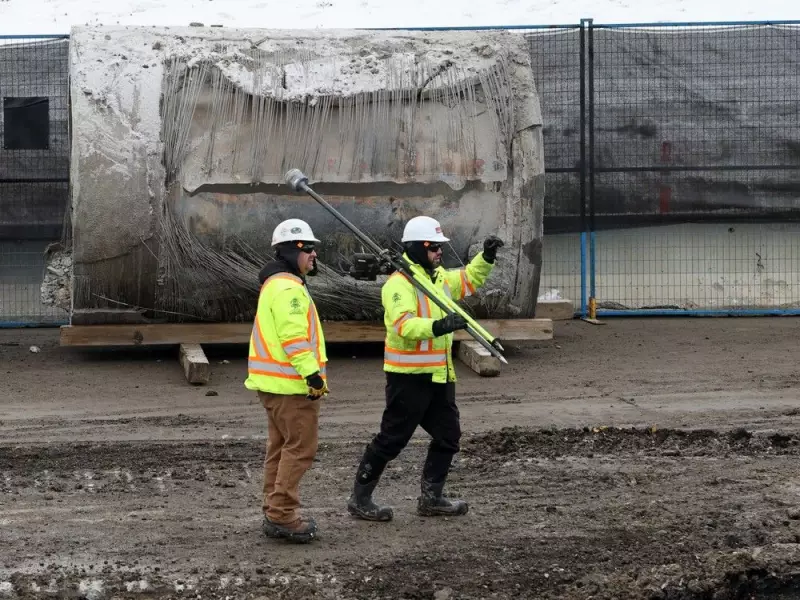
UCP Government Capitalizes on Calgary Water Crisis with Provincial Investigation
The Alberta government's decision to conduct its own review of governance failures that led to Calgary's recent water main breaks has sparked significant debate about political motivations. As Calgarians endure continued water restrictions, the provincial intervention appears strategically timed to capitalize on voter frustration in the city.
Independent Report Highlights Decades of Infrastructure Neglect
The city's independent panel delivered a scathing assessment of two decades of systemic failures in Calgary's water infrastructure management. This comprehensive report clearly demands accountability, yet the lack of immediate action has left residents increasingly frustrated with municipal leadership.
The provincial government clearly recognizes a political opportunity in this situation, focusing attention on another government's shortcomings rather than addressing its own policy challenges. With Calgary being a crucial electoral battleground, the water crisis provides a convenient platform for political maneuvering.

Timing Raises Questions About Political Motivations
Municipal Affairs Minister Dan Williams recently announced plans for a separate provincial review of Calgary's water system, demanding extensive documentation dating back to 2004 by January 27. This move comes despite the existence of the independent panel's already comprehensive report.
Interestingly, the United Conservative Party posted a video on January 14 that directly criticized Alberta NDP leader Naheed Nenshi's tenure as Calgary mayor during the period covered by the panel's investigation. UCP MLA Chantelle de Jonge stated in the video that "Calgary paid the price for his failures. Alberta can't afford to."
Credibility Concerns Surround Provincial Review
The timing of these political communications, which preceded the document deadline set by the province, raises serious questions about the government's impartiality. Given the obvious political conflict of interest and the conclusions the UCP has already reached regarding responsibility for system failures, many observers question whether this provincial review can maintain any credibility.
While government officials claim their intervention aims to ensure Calgary develops a safe and reliable water system, critics argue this appears more like an attempt to gather damaging information about a political rival. The strategic timing suggests an effort to keep infrastructure failures at the forefront of public consciousness during what could potentially become an election year in Alberta.
Broader Implications for Municipal-Provincial Relations
This situation highlights the complex dynamics between municipal and provincial governments in Alberta. The water crisis has become a focal point for broader political tensions, with infrastructure management serving as a proxy for larger debates about governance and accountability.
As Calgary residents continue to face water restrictions and infrastructure concerns, the political dimensions of this crisis may overshadow substantive discussions about long-term solutions for municipal water systems across the province.