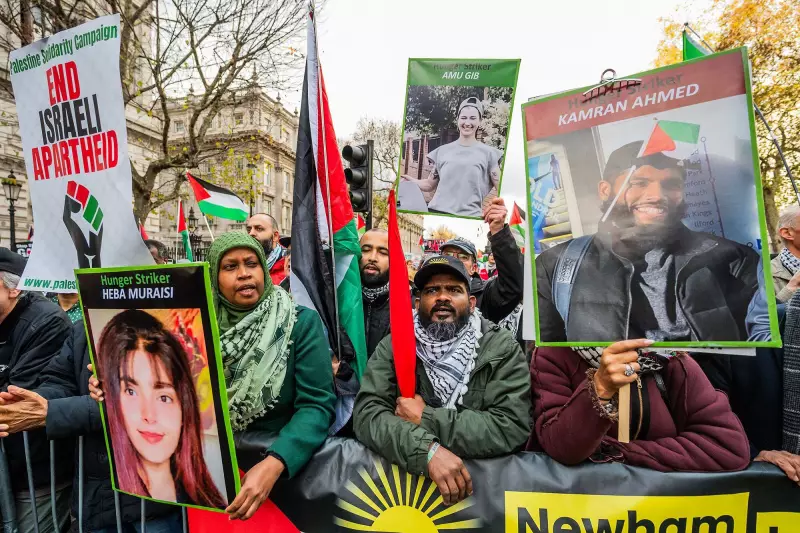
Activists connected to the pro-Palestinian group Palestine Action have officially concluded a hunger strike that lasted for several weeks in the United Kingdom. The protest, which drew international attention, was a dramatic form of activism aimed at drawing focus to the ongoing conflict in Gaza.
The Protest and Its Duration
The hunger strike, which extended over multiple weeks, was a coordinated effort by individuals aligned with the Palestine Action network. The strike ended on January 15, 2026, marking a significant moment for the movement. The action was not an isolated event but part of a broader campaign of civil disobedience and direct action championed by the group.
Support for the hunger strikers was visibly demonstrated in the heart of London. On November 29, 2025, supporters gathered for a public demonstration, showcasing the solidarity within the activist community. Images from that day, captured by photographer Guy Bell and distributed via CNN Newsource, show a crowd of demonstrators holding signs and banners in a show of support for the strikers' cause.

Context and Broader Activism
Palestine Action is known for its confrontational tactics, which often target companies and institutions it accuses of being complicit in or profiting from the Israeli occupation of Palestinian territories. The hunger strike represents a more personal and physically demanding form of protest within their repertoire. It underscores the depth of commitment among some activists and their willingness to endure significant personal sacrifice to advance their political goals.
The end of the hunger strike raises questions about the next steps for the movement. While the physical protest has ceased, the underlying demands for Palestinian solidarity and calls for boycotts, divestment, and sanctions (BDS) against Israel remain central to the group's mission. The strike succeeded in generating media coverage and keeping the issue in the public discourse, at least within certain circles.
International Reactions and Implications
Such protests in Western nations, including the U.K. and Canada, often spark complex debates about the limits of free speech, the definition of antisemitism, and the appropriate methods of political activism. The hunger strike, by its very nature, is designed to elicit an emotional and moral response, putting pressure on both public opinion and political leaders.
The conclusion of this particular action does not signal an end to the activism. Groups like Palestine Action are likely to continue organizing demonstrations, occupations, and other forms of direct action. The hunger strike will be recorded as a notable chapter in their ongoing campaign to shift public policy and corporate behaviour regarding the Israeli-Palestinian conflict.
The story of these protesters highlights the globalized nature of the conflict, where local actions in cities like London resonate on an international stage, influencing discussions and activism thousands of miles away, including within diverse nations like Canada.