Conservative MP Jamil Jivani has ignited significant controversy by challenging the federal government's National School Food Program, labeling it as unnecessary government overreach that expands state control over family life.
The Core Argument Against Federal Intervention
In a recent social media video that quickly went viral, Jamil Jivani presented what he described as a reasonable perspective on the school food debate. The Conservative MP argued that the government should focus on building an economy where parents can afford to buy their own children's lunches rather than creating costly federal programs.
Jivani expressed deep concern about the underlying issue, stating that the inability of some parents to provide school lunches should frighten Canadians and prompt economic solutions rather than government expansion. His comments immediately triggered strong reactions across social media platforms, with critics accusing him of being insensitive to children's needs.

Examining the Actual Scale of Food Insecurity
According to UNICEF data cited in the debate, North America demonstrates relatively low rates of childhood malnutrition compared to global averages. The prevalence of stunting affects only 4.1 percent of children in North America, significantly below the global average of 23.2 percent.
Similarly, wasting conditions affect merely 0.2 percent of the North American population compared to 6.6 percent worldwide. In Canada specifically, undernourishment impacts less than 2.5 percent of the total population.
While Statistics Canada data from 2022 indicates that 22.3 percent of families reported some level of food insecurity during the previous year, the percentage experiencing severe food insecurity where meals are skipped drops to approximately five percent.
Program Costs and Expansion Plans
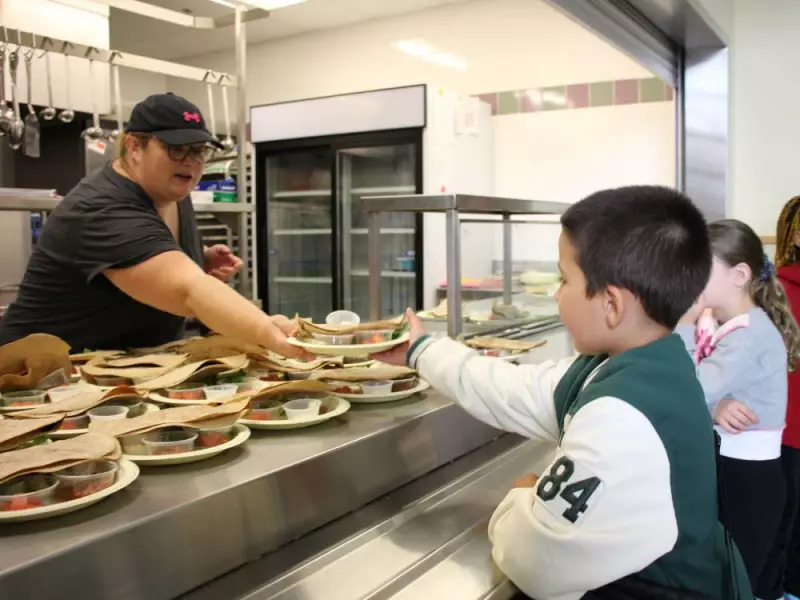
The financial implications of the National School Food Program are substantial. Provincial and municipal governments already allocate $401 million annually to school food programs. The federal government's budget 2024 committed an additional $1 billion over five years, increasing funding to $201 million this year and rising to $261 million by 2028-29.
The program aims to enroll approximately 400,000 additional children in school lunch programs, despite estimates suggesting around 280,000 children might actually require assistance based on severe food insecurity statistics. This expansion strategy indicates a move toward near-universal coverage that extends beyond addressing critical need.
The Carney Liberals now propose making the program permanent with ongoing funding of $216.6 million annually starting in 2029, representing a significant long-term commitment of taxpayer resources.
The debate continues to highlight fundamental differences in political philosophy regarding government's proper role in addressing social issues and whether economic solutions or direct government programs better serve Canadian families in the long term.