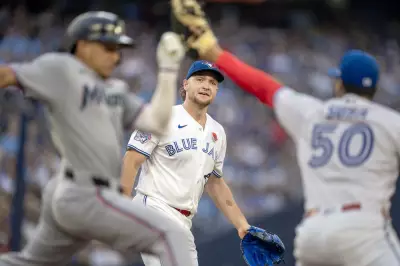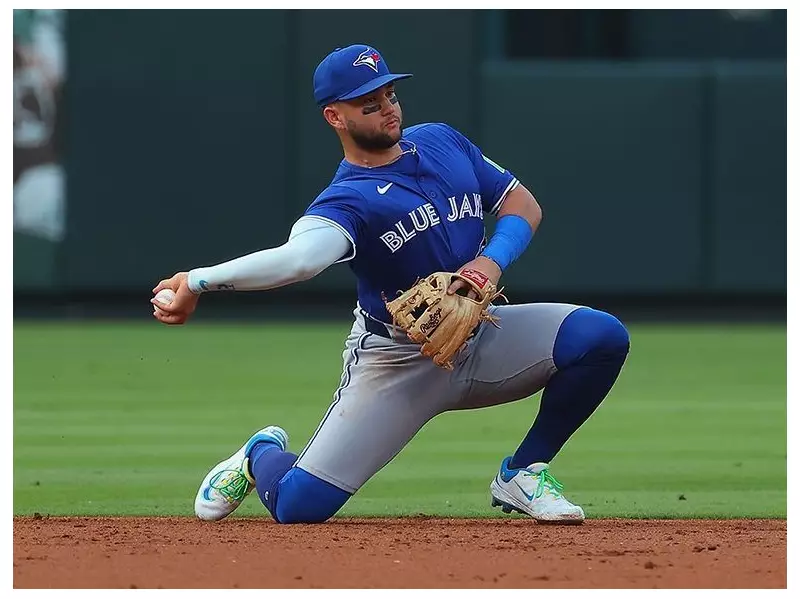
The upcoming free agency of Toronto Blue Jays star Bo Bichette is sparking a pivotal question across Major League Baseball: what is his best defensive position, and how will it affect his market value? With the winter meetings set to begin, a consensus is emerging that his long-term future may not be at shortstop, a reality with substantial financial implications.
The Defensive Debate and Financial Fallout
Scouts and front offices are divided on Bichette's capabilities at shortstop. While some teams are deterred by his publicly available defensive metrics, others conduct their own evaluations and believe he is a more competent defender than the numbers suggest. However, the player himself has not publicly declared a positional preference for the years ahead.
The financial stakes of this debate are enormous. The market pays shortstops a premium over second basemen. Currently, eight shortstops earn more than the highest-paid second baseman in baseball. A shortstop with Bichette's offensive profile could command an annual salary of $30 million or more. In contrast, an elite second baseman would likely land a contract in the low $20 millions per year.

Where Could Bichette Land?
Despite the potential dip in value, Bichette's market may be narrower than expected for a player of his calibre. The New York Yankees have reportedly pulled back on major spending, the Texas Rangers are following a similar path, and the Los Angeles Dodgers are not seen as a likely destination. This dynamic potentially leaves the Blue Jays as his most logical fit.
With the financial backing of Edward Rogers, the Jays could afford to retain their homegrown star. A hypothetical infield featuring Vladimir Guerrero Jr. at first, Bichette at second, and Andres Gimenez at shortstop, alongside Ernie Clement, would create the highest-paid infield in baseball at approximately $80 million per season.
One rumour circulating ahead of the meetings in Orlando links Bichette to the Boston Red Sox. However, the fit and mutual need between the player and the Blue Jays appear strongest, suggesting a return to Toronto remains a distinct possibility.
Simmons' Sports Notebook: Leafs' Legacy and Olympic Roster Puzzles
In his wide-ranging column, Steve Simmons also addressed several other major sports topics. He pointed to the departure of Lou Lamoriello as a critical error in the Toronto Maple Leafs' recent history, noting the Islanders' six playoff round wins under Lamoriello compared to the Leafs' two in the same period, alongside questionable asset management.
Simmons highlighted the perplexing lack of power-play production from Auston Matthews, who had only one goal with the man advantage this season, tying him for 125th in the league. For his career, just 24% of Matthews' goals have come on the power play, a figure significantly lower than other elite snipers like Alex Ovechkin (36%) and Brett Hull (35%).
Looking ahead to the Milan Olympics, Simmons played the role of GM for Team Canada's forward group. With only eight spots available behind locks like Connor McDavid and Nathan MacKinnon, he selected Nick Suzuki, Sam Bennett, Brad Marchand, Tom Wilson, Macklin Celebrini, Brandon Hagel, Wyatt Johnston, and Connor Bedard. Notably, he left off Mark Stone due to health and speed concerns, and deemed rookie Matthew Schaefer, while talented, not yet ready for the Olympic stage.
Other notes included praise for Florida Panthers forward Sam Reinhart, described as "Sidney Crosby smart" and a future general manager candidate, and a lament over the confusing state of video replay across professional sports, which he argues now often obscures rather than clarifies rulings.