Vancouver Canucks' Defensive Woes Result in 7-4 Loss to Utah Mammoth
The Vancouver Canucks experienced a significant defensive collapse in a 7-4 loss to the playoff-bound Utah Mammoth on Saturday, April 4, 2026. Despite showcasing a relatively strong offensive game, the Canucks' defensive lapses proved costly, with goaltender Nikita Tolopilo facing an overwhelming number of high-quality chances.
Defensive Breakdowns Overshadow Offensive Efforts
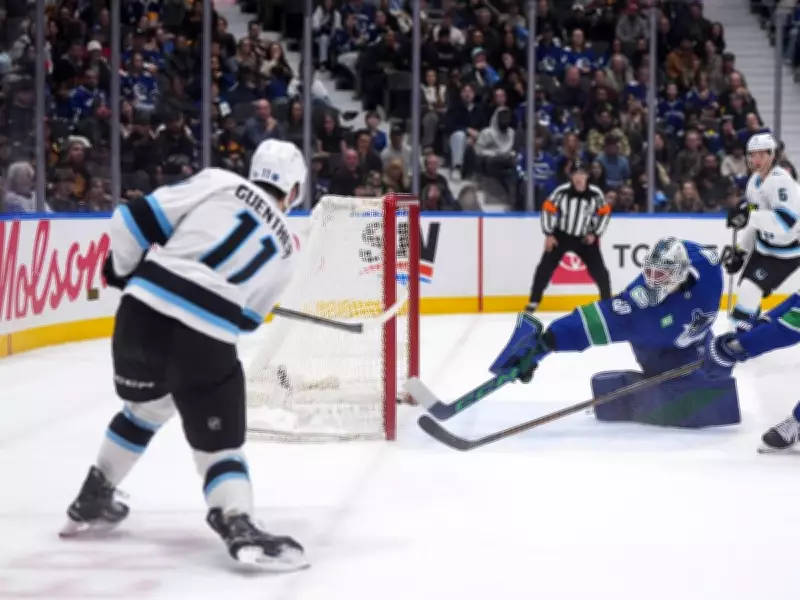
The Canucks demonstrated effective puck movement and scored on the power play, but their defensive structure repeatedly faltered. Utah's Dylan Guenther capitalized on these weaknesses, scoring his 38th goal of the season as part of a four-goal performance that highlighted Vancouver's struggles. Guenther's goal, a skillful play, underscored the defensive chaos that plagued the Canucks throughout the game.
Nikita Tolopilo, thrust into the starting role due to Kevin Lankinen's late scratch, faced relentless pressure. He conceded four goals on the first 15 shots, with none directly attributable to his performance. The goals included deflections, tips, and a complete defensive breakdown that left Guenther unmarked—a recurring issue that Utah exploited multiple times.

Player Grades Reflect Team-Wide Struggles
Evaluating the lines as trios reveals the extent of the defensive issues:
- Evander Kane, Elias Pettersson, Jake DeBrusk (C): Kane hit a post early and had a decent chance, but his game slowed. Pettersson showed persistence by driving to the net, while DeBrusk scored a nice power-play goal but otherwise struggled to find rhythm.
- Drew O’Connor, Marco Rossi, Brock Boeser (C-): This line was ineffective at even strength, contributing to three goals against. Boeser did manage a power-play goal, but overall, their defensive play was lacking.
- Max Sasson, Teddy Blueger, Linus Karlsson (B): In a game with little energy, Sasson engaged physically with Sean Durzi, and Karlsson stood out as one of the most exciting players, offering a spark despite the loss.
- Liam Öhgren, Ty Mueller, Aatu Räty (C+): Öhgren, typically a stabilizing force, was shuffled down the lineup unexpectedly. Mueller had a minor chance but was otherwise average, raising questions about lineup decisions over players like Hoglander.
Defensive Pairings and Goaltending Analysis
The defensive corps had a particularly rough night:
- Zeev Buium and Filip Hronek (C-): This duo was overwhelmed, with Buium deflecting a goal past Tolopilo and both struggling on Utah's sixth goal. Their lack of cohesion was evident.
- Marcus Pettersson and Tom Willander (C): Pettersson made a critical error on the fourth goal, while Willander showed aggression but also defensive inconsistencies.
- P-O Joseph and Victor Mancini (C-): Joseph failed to disrupt attackers, leading to goals like Kailer Yamamoto's, and Mancini did not respond to physical play from agitator Liam O’Brien, raising concerns about team toughness.
Goaltender Nikita Tolopilo (C+): Tolopilo faced an impossible situation, with defensive breakdowns leaving him exposed. His performance was commendable given the circumstances, but the team's overall defensive effort was insufficient.
Historical Context and Team Culture
The loss adds to a challenging season for the Canucks, who are among the worst home teams in NHL history with a .269 points percentage in 2025-26. This places them alongside expansion-era teams, highlighting systemic issues. Unlike teams tanking for top draft picks, the Canucks' direction remains unclear, emphasizing the need for cultural and strategic changes.
The Utah Mammoth, once struggling both on and off the ice, now serve as a lesson in building stability and making sharp decisions. Their transformation contrasts sharply with Vancouver's ongoing rebuild, underscoring the importance of cohesive team identity and defensive accountability.
As the Canucks look ahead, addressing defensive lapses and fostering a more aggressive, responsive mindset will be crucial. The loss to Utah not only exposed tactical flaws but also raised questions about the team's resilience and long-term vision in a competitive NHL landscape.