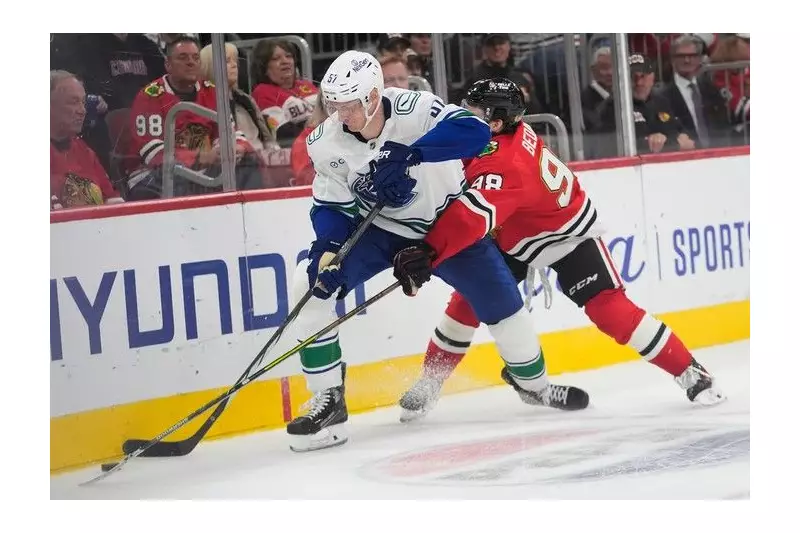
Vancouver Canucks defenceman Tyler Myers is taking a scientific approach to maintaining his performance during the NHL's demanding condensed schedule, revealing he underwent extensive blood work during the offseason to identify potential health markers that could affect his durability.
The 35-year-old veteran told Postmedia on November 12, 2025, that this proactive measure provided peace of mind and guided his nutritional planning as the league compressed its calendar to accommodate the 2026 Winter Olympics in Milan and Cortina, Italy.
The Science Behind the Strategy
"Personally, I feel great physically," Myers stated before the Canucks departed for a three-game road trip. "I did more blood work than I've done in other years and got on different vitamins and other things. I wanted to make sure there weren't any red flags."

Advanced blood work examines numerous body functions, from basic metabolic measures to tests for hundreds of different markers including electrolytes, glucose, liver and kidney function, and inflammation levels. For Myers, the results directly influenced his dietary approach to maximize performance.
"It shows you a lot of information to put you on a food plan," Myers explained. "I think every player should kind of do these things, especially later in their careers, to stay at a high level. If there's a way to decrease inflammation, you have more endurance."
Injury Crisis Hits Canucks Roster
Myers' proactive health measures come as the Canucks navigate a significant injury crisis that has sidelined multiple key players. The team has endured as many as nine injuries this season, with five players currently unavailable.
The most significant recent blow came when starting goaltender Thatcher Demko suffered a groin strain during a November 11 game. Team physician Dr. Harjas Grewal confirmed the injury is expected to keep Demko sidelined for two to three weeks, forcing backup Kevin Lankinen into a starting role while Jiri Patera was recalled from the minors.
Other injured players include:
- Teddy Blueger (knee injury)
- Nils Hoglander (ankle ailment)
- Filip Chytil (concussion)
- Derek Forbort (long-term injury reserve)
Jonathan Lekkerimäki and Victor Mancini have recently returned to practice after recovering from shoulder injuries.
Condensed Schedule Creates Challenges
The NHL's compressed calendar, designed to accommodate the upcoming Winter Olympics, has created unique challenges for all teams. Myers identified the lack of practice time as particularly problematic for working on specific aspects of their game.
"The biggest adjustment is having less practice time, so you have to do more in pre-game skates," Myers noted. "We just have to continue to tweak things more in pre-game skates because we're not able to work on as much."
This limited practice time has especially impacted the Canucks' penalty kill, which has struggled dramatically this season. After ranking third overall last season at 82.6 percent, the unit has plummeted to last place at 66.7 percent and has surrendered four power-play goals in their last two outings.
Myers, who anchors the first penalty kill unit, emphasized the need for improvement. "It has to get better if we want to have success this year," he said. "We're caught between in a lot of different areas. Getting that connection back up top, to the back and the goalie, will put us all in a better spot."
The injury situation isn't unique to Vancouver, with upcoming opponents also dealing with significant health issues. The Carolina Hurricanes had four injured defencemen before one returned, Tampa Bay has seven players sidelined, and Florida has five unavailable players.
Myers has proven remarkably durable in recent seasons, missing just 20 games over the last four years—only 14 due to injury with six coming from suspensions. His commitment to advanced preparation through blood work and targeted nutrition demonstrates the evolving approach veteran players are taking to extend their careers in an increasingly demanding NHL landscape.