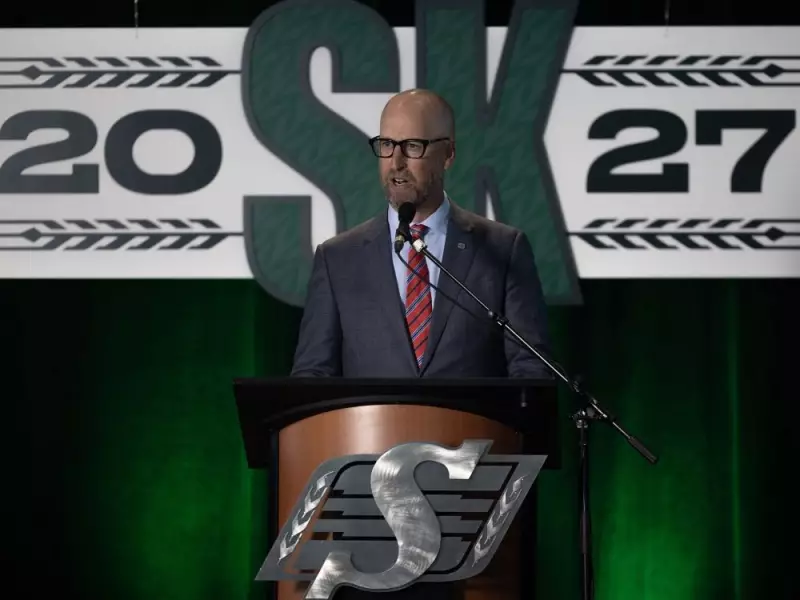
In his first season as CFL commissioner, Stewart Johnston has faced controversy, online debates, and significant public scrutiny. Now, during Grey Cup Week in Winnipeg, he aims to set the record straight about his vision for the future of Canadian football.
Clarifying the Vision for Canadian Football
Johnston directly addressed what he calls an unfounded narrative that emerged during the season. There is no plan to Americanize the game, he stated unequivocally. The league is not considering switching from three downs to four, reducing players from twelve to eleven, narrowing the field, or altering the unique motion that defines the Canadian game.
"I wish I had been more clear from the beginning," Johnston admitted. "A narrative came out and grew but it wasn't based on fact. There was a fear of Americanization of our game and our league. And that surprised me because Americanizing our game couldn't have been further from our thought process."

He emphasized the core elements the league intends to protect: Our game consists of three downs, now take this seriously, there is no thought of anything other than three downs. He reiterated the commitment to twelve players, the wide field, the deep end zone, and the defence starting a yard off the ball.
Addressing Mid-Season Controversy
The controversy began when Johnston announced several proposed rule changes mid-season. These included a smaller end zone, a shorter field, moving goal posts to the back of the end zone, and modifying the rouge so that a missed field goal no longer automatically results in a single point.
While some applauded the changes as progressive, a vocal contingent of traditionalists viewed them as an attack on the CFL's heritage. Johnston expressed slight exasperation at the reaction, noting the irony that many critics who champion the history of the game simultaneously celebrate American CFL legends like Doug Flutie, Warren Moon, George Reed, and Ron Lancaster.
The commissioner made a point to listen to critics, including all-star quarterback Nathan Rourke, who was among the most prominent voices against the changes.
Building the Future: Olympics and Grassroots Growth
Amid the debates, Johnston has also been focused on forward-looking initiatives. In a significant move, he and the CFL board of governors approved a plan to make CFL players available for the debut of flag football at the 2028 Summer Olympics in Los Angeles.
This decision, which could see players like Rourke competing for Canada in the middle of the CFL season, is seen as a strategic building block. The potential for a Canadian team to win gold on American soil could have a massive long-term impact on the sport's profile.
Johnston also announced a new partnership aimed at growing football across Canada. He seeks to bridge the historical disconnect between high school programs, minor football, and provincial and national bodies. This comes at a time when more Canadians are playing at a high level than ever before.
A Fresh Voice and a Resilient League
This season also saw the introduction of a new, unpredictable voice on CFL broadcasts. Former NFL player Luke Willson, who grew up in Ontario, joined TSN's coverage and was encouraged to be himself. His candid commentary sparked online debates and brought a fresh energy to the league's coverage.
"I thought the addition of Luke Willson brought a fresh perspective and energy that elevated the broadcasts even further," Johnston commented, acknowledging Willson's role alongside on-field star Nathan Rourke as a standout personality of the season.
Reflecting on the CFL's enduring nature, Johnston pointed to its remarkable resilience. The league survives and entertains despite its challenges. With no teams currently in financial crisis, the first-year commissioner sees an opportunity to build and strengthen.
As his first Grey Cup week as commissioner unfolds, Johnston's primary goal is to settle the waters. I have to be as clear as possible on this, he stated. We're here to protect the CFL, the three-down game. We want to settle those fears and if they are still out there, we want to settle them right now.