Maple Leafs' Tepid Response to Matthews Injury Sparks Debate on Team Toughness
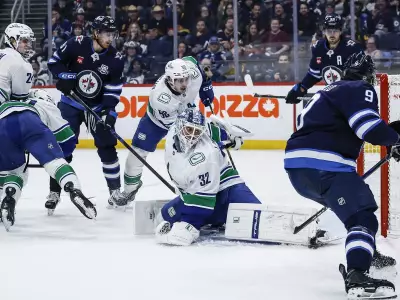
The Toronto Maple Leafs' recent victory over the Anaheim Ducks was overshadowed by a controversial incident that has reignited long-standing concerns about the team's physicality and willingness to protect its star players.
Controversial Hit on Captain Auston Matthews
During Thursday's game, Maple Leafs captain Auston Matthews suffered what appeared to be a deliberate knee injury from Anaheim Ducks defenseman Radko Gudas. The incident occurred just five minutes after Matthews had broken his 12-game personal goal slump, adding insult to injury. What followed has become the subject of intense scrutiny across the hockey world.
Gudas delivered the questionable hit and skated to the penalty box largely untouched by the four other Maple Leafs players on the ice at the time. The defenseman was scheduled for a phone hearing with the NHL's Department of Player Safety on Friday, while the Leafs awaited further medical evaluation of Matthews' condition.
Leadership Voices Disappointment
Toronto coach Craig Berube, known for his physical playing style during his own NHL career, expressed clear disappointment with his team's response to the incident. "We should've had four guys in there doing something about it, but it didn't happen then," Berube stated bluntly after the game. "That's a dirty play."
Alternate captain Morgan Rielly attempted to shoulder responsibility for the lack of immediate retaliation. "I take full responsibility for not being the first one in there," Rielly acknowledged, though he noted his viewing angle may have obscured the severity of the hit initially.
Historical Patterns of Passive Response
The muted reaction to Gudas' hit on Matthews appears consistent with historical patterns for the Maple Leafs organization. Despite general manager Brad Treliving's efforts to toughen the team's composition for playoff contention, the response to physical challenges has remained largely passive.
This tendency persists even among remaining Core Four members Rielly and William Nylander, who were on the ice during the incident. The team's physical players, Dakota Joshua and Steven Lorentz, had already played their way out of the lineup before Thursday's game, leaving a noticeable gap in the team's enforcement capabilities.
Alternative Forms of Retaliation
The Maple Leafs ultimately pursued a different form of retaliation, adhering to what appears to be an organizational philosophy of responding through disciplined play rather than physical confrontation. Toronto allowed Gudas' five-minute major penalty to run its full course without engaging in retaliatory actions that might have resulted in additional penalties.
This approach yielded results on the scoreboard, with William Nylander and John Tavares contributing to a four-goal comeback during the power play opportunity created by Gudas' penalty. "We responded to what the game required," Tavares explained. "Emotions got high, we came back and initiated play. We took advantage of the power-play opportunity we had."
New Players Show Different Approach
Interestingly, the most physical responses came from newer additions to the roster. Michael Pezzetta engaged in a fight at the opening faceoff of his Maple Leafs debut, while rookie Easton Cowan dropped the gloves in the third period to defend teammate Nick Robertson.
Rielly did attempt to make amends later in the game by confronting Anaheim's Jeffrey Viel, and Max Domi served 14 penalty minutes while engaged in what appeared to be a personal feud with Ducks player Beckett Sennecke. Defenseman Jake McCabe, who had jumped Montreal's Brendan Gallagher in the previous game, was wrestling with Viel as the final horn sounded.
Broader Implications for Playoff Readiness
The incident has sparked broader discussions about whether the Maple Leafs' approach to physical confrontation will serve them well in playoff scenarios. Historically, teams like Florida and Boston have successfully pushed Toronto around during crucial postseason moments, raising questions about whether a more physically assertive approach might be necessary for playoff success.
While the team secured a much-needed victory to break an eight-game losing streak, the response to Matthews' injury has left many fans and analysts questioning whether the organization has truly addressed its longstanding issues with physical response and team protection.
The situation continues to develop as the team awaits further information about Matthews' condition and prepares for upcoming games that will test both their skill and their willingness to engage physically when circumstances demand it.