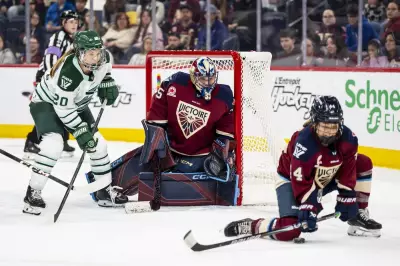
Minnesota Wild blueliner Quinn Hughes is starting to settle into his new surroundings, expressing a growing sense of comfort after his high-profile move to the team. The star defenceman's comments come as he integrates into the Wild's system during the 2025-26 NHL season.
Adjusting to a New System and Teammates
The transition to a new franchise is a significant challenge for any player, and Hughes is no exception. Moving teams involves adapting to different coaching strategies, new defensive pairings, and unfamiliar systems on both ends of the ice. Hughes has been actively working to build chemistry with his new teammates and understand the specific expectations of the Wild's coaching staff. This period of adjustment is critical for a player whose role is pivotal to the team's defensive stability and offensive transition game.
On-Ice Action in Toronto
Evidence of Hughes's ongoing integration was on display during a recent game. On Monday, January 19, 2026, Hughes and the Wild faced the Toronto Maple Leafs on the road. During the contest, Hughes, wearing his familiar number 43, was seen in a spirited battle for puck possession with Maple Leafs forward Matthew Knies, who wears number 23. This moment, captured by The Canadian Press photographer Nathan Denette, symbolizes the competitive battles Hughes now engages in as a member of the Central Division's Wild, rather than his former Pacific Division club.

The Path Forward for Hughes and the Wild
For the Minnesota Wild, acquiring a player of Quinn Hughes's calibre represents a major commitment to bolstering their defensive corps. His ability to quarterback the power play and drive play from the back end is a coveted asset. As Hughes's comfort level continues to rise, the Wild organization and its fans will be looking for his on-ice impact to grow correspondingly. His successful adaptation is not just a personal milestone but a key factor in the team's performance and playoff aspirations for the current season and beyond. The process underscores the human element behind major sports trades, where elite athletes must quickly adapt to new cities, teams, and expectations under the spotlight of professional hockey.