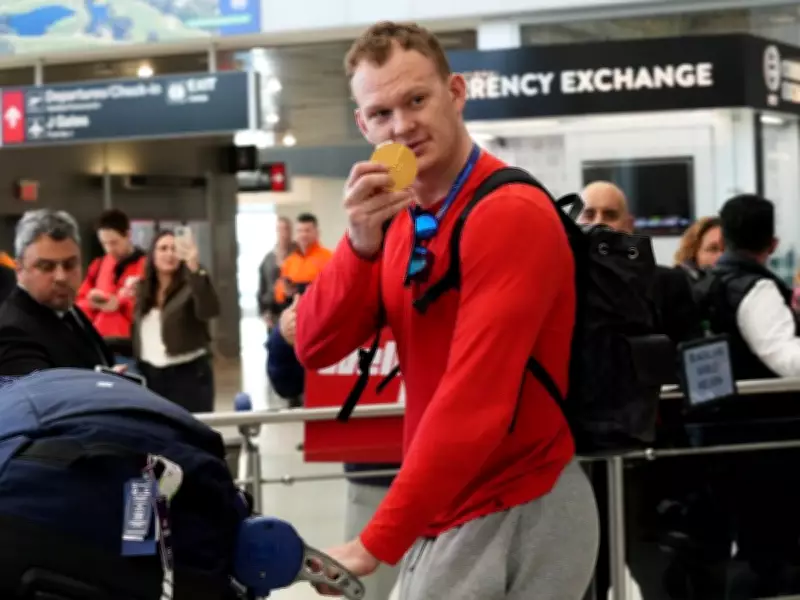
The actions of the U.S. Olympic men's hockey team following their gold medal victory at the Milano Cortina Olympics have ignited a firestorm of controversy, leaving an icy stain on the sport that shows no signs of fading. By allowing themselves to be used as props in what critics describe as a Trump propaganda carnival and participating in what was perceived as an insult to the women's team, these athletes have alienated fans across Canada and raised serious questions about their judgment.
A Historical Perspective on U.S.-Canada Relations
More than fifty years ago, journalist Robert Hunter—who would later become a founder of Greenpeace—offered a prescient metaphor about Canada's relationship with its southern neighbor. He described living next to the United States as akin to residing beneath a stage where the world's loudest rock band played continuously. Today, that metaphor resonates more powerfully than ever, particularly in light of recent events involving American hockey players and their controversial White House visit.
The Controversial Celebration
The trouble began when alleged FBI director Kash Patel appeared in the American dressing room during post-victory celebrations. What should have been a moment of pure triumph quickly turned sour when former President Donald Trump called to invite the team to the White House and his State of the Union address. The players' reaction—giggling like schoolboys as Trump made what many considered a distasteful joke about inviting the women's team—created what observers now call a watershed moment for women's hockey in North America.

"It was sort of a distasteful joke," said American women's team captain Hilary Knight, who responded with characteristic class and grace. "Unfortunately that is overshadowing a lot of the success, the success of just women at the Olympics carrying for Team USA and having amazing gold medal feats."
The Diverging Paths of Men's and Women's Hockey
As writer Jennifer Weiner noted, the contrast between the treatment of male and female athletes couldn't be starker. "The male athletes are flying private, back to their seven-figure NHL paycheques and a White House rolling out the red carpet. The women are flying coach, back to the grind, to a league that barely pays them to play. The men, celebrated. The women, mocked."
This disparity became painfully evident when the women's team made the principled decision to refuse the White House invitation, while most of the men's team—with only five players declining—chose to attend. Among the most visible participants were Jack Eichel, Auston Matthews, Matthew Tkachuk, and Brady Tkachuk, several of whom have played for Canadian teams and serve as captains for franchises in Canada's largest city and national capital.
The Aftermath and Fallout
The controversy deepened when the White House TikTok account posted a fake video showing Brady Tkachuk making offensive remarks about Canadians. Though Tkachuk quickly denounced the video as fabricated, stating "those words would never come out of my mouth," the damage had been done. Merely by visiting what critics describe as a farcical State of the Union event and allowing themselves to be used as political props, the players insulted fans across Canada—a country that has frequently found itself in Trump's crosshairs.
These athletes, who have earned millions playing in Canada, should have demonstrated greater awareness of the political climate and shown more respect for the country that has embraced them professionally. As one observer quipped about the Tkachuk brothers, "They're so proud of their gold medals, they're having them bronzed"—a remark that captures the bitter humor surrounding this controversy.
Lasting Consequences for the Sport
The repercussions continue to unfold, with calls for leadership changes on teams featuring these players. Some argue that neither Matthews nor Tkachuk should continue wearing the captain's "C" in Canada given their participation in what many view as a disrespectful political spectacle. Their actions have created a rift with Canadian fans that may prove difficult to repair, particularly as Trump continues what critics describe as efforts to undermine American democracy.

What began as a celebration of Olympic achievement has transformed into a cautionary tale about the intersection of sports and politics. The men's team's decisions have not only overshadowed the women's legitimate accomplishments but have also demonstrated how quickly athletic glory can tarnish when athletes become entangled in political controversies. The stain on hockey's reputation, particularly in the eyes of Canadian fans, may indeed prove permanent.