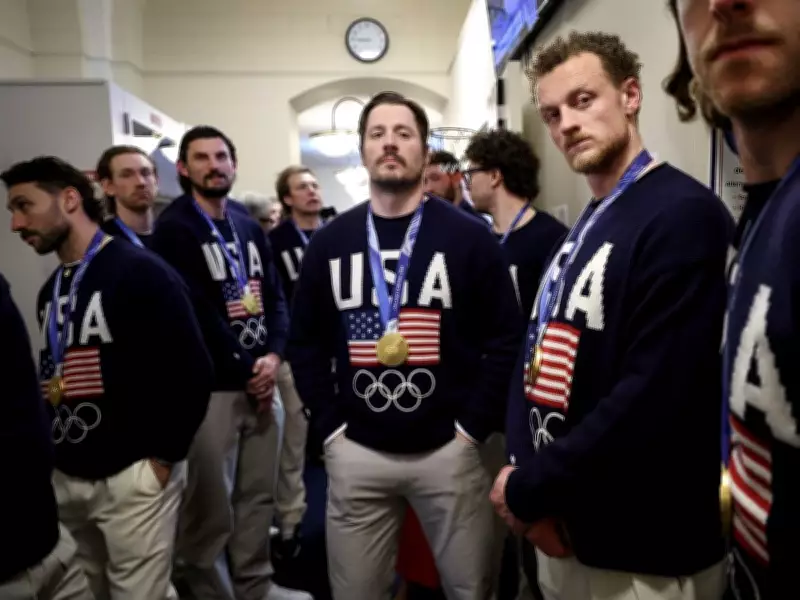
Team USA's Own Goal Tarnishes Olympic Hockey Victory with Political Controversy
A recent letter to the editor has sparked intense debate by condemning the U.S. men's Olympic hockey team for what the author describes as a "spectacularly disappointing" action following their gold medal win at the Winter Olympics. The letter, responding to an earlier column by Allison Hanes, argues that the team's celebration with former U.S. President Donald Trump transformed them from winners into losers in the eyes of many.
From Triumph to Disgrace in Moments
The U.S. men's hockey team had just achieved a stirring victory over Team Canada in the gold-medal game, a moment that should have been celebrated as a pinnacle of athletic achievement. However, according to the letter writer, before the players even emerged from the locker room, they managed to tarnish their own accomplishment through poor judgment.
Perhaps one can excuse their lack of judgment as youthful arrogance, caught up in an emotional moment of epic proportions, the letter states. But their coaches, managers and the entire brain trust of USA Hockey? This rhetorical question highlights the broader failure of leadership that allowed the situation to unfold.

Political Celebrations Overshadow Athletic Achievement
The core of the controversy revolves around the team's decision to include Donald Trump in their post-victory celebration. The letter argues that this choice was inappropriate and detracted from what should have been a purely sports-focused achievement. It’s not too late to do the right thing — if the entire team confronts this mess by acknowledging that the talking head in the White House had no place in their celebration, the author contends.
Furthermore, the letter points out that this action disrespects the U.S. women's hockey team, whom the author describes as the great American heroes. This comparison underscores the gender dynamics at play and suggests that the men's team failed to recognize the achievements of their female counterparts.
Accountability and Redemption
The letter does acknowledge one positive development: Props to Team USA player Charlie McAvoy for stepping up to apologize. This gesture represents a potential path toward redemption for the team. However, the author makes it clear that individual apologies are insufficient without collective accountability.
If they don’t, in my books, they are losers forever, the letter concludes, emphasizing the lasting impact of this controversy on the team's legacy. The author, Michael Osterland of Westmount, frames this not just as a sports issue but as a matter of character and values.
Broader Context of Olympic Discourse
The letter appears alongside other reader submissions addressing various Olympic-related topics, creating a tapestry of public opinion about the Games. One letter praises Canadian athletes despite medal count concerns, while others address unrelated political issues in Quebec. This context shows how Olympic controversies often intersect with broader societal debates.
The original column by Allison Hanes, titled "Women’s hockey shouldn’t be a joke," apparently provided the foundation for this response, though the letter focuses specifically on the men's team's actions. The Gazette's letters section demonstrates how sports journalism can spark meaningful public dialogue about ethics, politics, and national identity.
As the debate continues, the fundamental question remains: Can athletic achievements be separated from political associations, or are they inevitably intertwined in today's polarized climate? The Team USA hockey controversy suggests that for many observers, the answer is increasingly the latter.