Iran's World Cup Participation in Jeopardy Following US-Israeli Military Strikes
The escalating conflict in the Middle East has cast serious doubt over whether Iran's national football team will participate in the upcoming 2026 FIFA World Cup, where they are scheduled to play group stage matches in the United States. The situation has created significant uncertainty just months before the tournament's opening games.
Iranian Football Federation Expresses Grave Concerns
Within hours of joint United States and Israeli military strikes beginning on Saturday, Iranian Football Federation president Mehdi Taj made a sobering statement on national television. "What is certain at the present time is that with this attack and this cruelty, we cannot look forward to the World Cup with hope," Taj declared, highlighting the profound impact of recent events on sporting prospects.
The federation took immediate action by suspending Iran's domestic football league, signaling the seriousness with which they view the current geopolitical situation. This development comes despite "Team Melli" having successfully secured qualification in March of last year for what would be their seventh World Cup appearance and fourth consecutive tournament.

FIFA Adopts Cautious Stance Amid Growing Uncertainty
World football's governing body is maintaining a careful position regarding the possibility of Iran withdrawing from the prestigious tournament. FIFA Secretary General Mattias Grafstrom stated on Saturday, "We had a meeting... and it is premature to comment in detail, but we will monitor developments around all issues around the world."
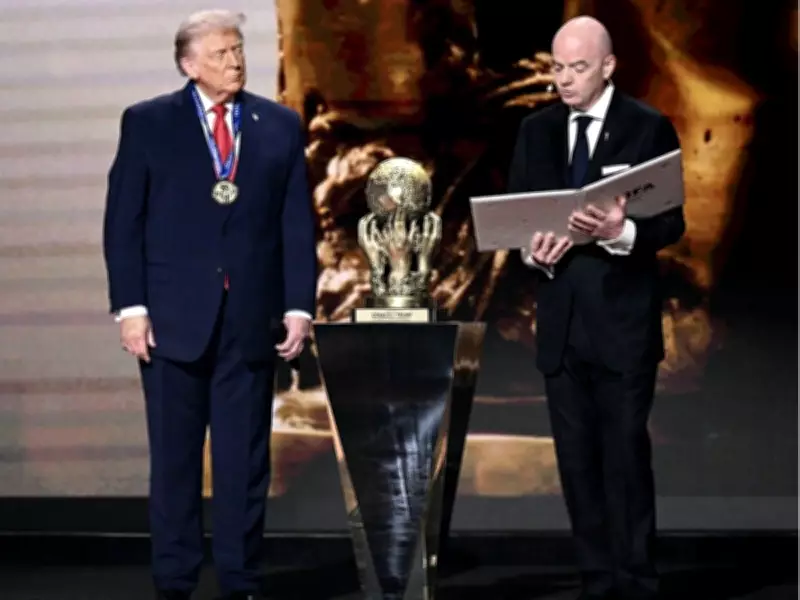
A source close to FIFA confirmed that no formal discussions have yet occurred with the Iranian Football Federation about a potential team withdrawal. However, with exactly one hundred days remaining until the tournament's opening match, the situation presents significant challenges for FIFA President Gianni Infantino, who has cultivated a close relationship with US President Donald Trump.
Tournament Logistics and Regional Complications
Iran has been drawn into Group G alongside Belgium, Egypt, and New Zealand, with their scheduled matches including two games in Los Angeles and one in Seattle. The Los Angeles area is home to a substantial Iranian diaspora community that has resided there since the 1979 Islamic Revolution, many of whom supported the overthrown Pahlavi dynasty.
The conflict has expanded to involve other Gulf nations participating in the World Cup, with Saudi Arabia, Qatar, and Jordan all facing retaliatory strikes from Iran. This regional escalation further complicates the tournament's geopolitical landscape.
FIFA Regulations and Potential Replacements
FIFA's official regulations contain no specific provisions addressing boycotts by qualified teams. According to Article 6 of the 2026 World Cup regulations, "if a participating member association withdraws...as a result of force majeure," FIFA "shall decide on the matter at its sole discretion and take whatever action is deemed necessary."
A source familiar with FIFA's procedures indicated that "specific decisions" would need to be made to replace Iran with another team if necessary. Should Iran withdraw or face exclusion from the competition, FIFA retains complete authority to determine appropriate actions, including potentially "replacing the participating member association in question with another association."
Logically, Iran's absence would likely create an opportunity for another Asian nation to assume their position in the tournament, though FIFA would need to establish specific protocols for such a scenario.