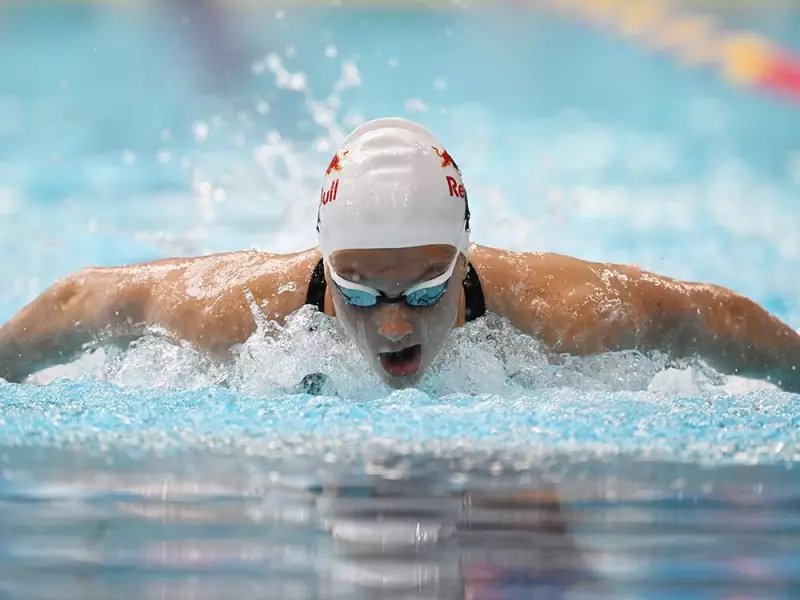
A severe shortage of competition-standard swimming pools across Canada is pushing elite athletes to train abroad and jeopardizing the nation's future Olympic success, with Vancouver emerging as a central battleground in the fight to preserve critical aquatic infrastructure.
An Infrastructure Crisis Declared
Earlier this year, Swimming Canada declared an infrastructure crisis, warning that too many aging 50-metre pools are being closed without adequate replacements. The national sport organization, representing 350 clubs and 50,000 competitive swimmers, fears that in 20 years, there may be nowhere in Canada for the next superstar to train. This crisis comes despite a surge of interest in swimming, largely fueled by the medal-winning performances of phenom Summer McIntosh, who won five medals at the 2025 World Aquatics Championships and four at the 2024 Paris Olympics.
While McIntosh's personal training decisions led her to Florida and then Texas, her career began a decade ago in the Greater Toronto Area. She trained at facilities like the Etobicoke Olympium, a pool built in 1975 and upgraded for the 2015 Pan Am Games. Its extended lifespan is an exception, as a significant portion of Canada's aquatic inventory is now reaching its end-of-life.

Vancouver: A Microcosm of the National Struggle
The city of Vancouver has become a focal point of this national issue. The Vancouver Park Board approved a renovation plan for the aging Vancouver Aquatic Centre (VAC) that would eliminate its 50-metre competition pool, replacing it with a 25-metre lap pool and a leisure river. This mirrors the troubling national trend.
"The Vancouver Aquatic Center is a perfect example," said Jocelyn Jay, Swimming Canada's former associate director of sport development. "We're really losing 50 per cent of our pools across the country." She emphasized the loss affects not just elite athletes but also community access, citing an 8,000-person wait-list for swim lessons in Vancouver as evidence of a current crisis.
The only other indoor 50-metre pool under the park board's purview is the Hillcrest Aquatic Centre, which often operates at or over capacity. A citizen's group, represented by spokesperson Jon Girard, has petitioned the B.C. Supreme Court to quash the VAC renovation approval, citing a 2022 plebiscite where voters supported renewing the 50-metre pool. The case is expected to be heard in early 2026.
Broken Maintenance and a Search for Solutions
Jeannie Lo, president of the Canadian Dolphin Swim Club and Swim BC, argues that many pools are deemed "end-of-life" due to chronic underfunding of maintenance, not inherent obsolescence. "The reason these facilities are reaching end-of-life is because they've never been maintained," she stated.
Facing construction costs that can reach hundreds of millions for traditional recreation centres, stakeholders are exploring innovative and cost-effective alternatives. One promising model involves partnerships between companies like Myrtha Pools and Sprung Structures. These collaborations can deliver functional, energy-efficient pool facilities in modular structures at a fraction of the cost of traditional builds.
The township of Uxbridge, Ontario, is pioneering this approach with a new $16-million facility featuring an eight-lane, 25-metre Myrtha pool inside a Sprung structure. Mayor Dave Barton acknowledged initial aesthetic concerns but prioritized keeping a pool open for the community. "We don't need to build the Taj Mahal every time we want to build a pool," echoed Swim Alberta's executive director Shawn Holman, advocating for such innovative solutions.
A Nationwide Challenge with Glimmers of Hope
The scale of the problem is national. Canada's inventory of indoor 50-metre pools stands at less than 70. In contrast, Australia, an Olympic swimming powerhouse, boasts around 800. A report from Royal Life Saving Australia, however, questions the economic efficiency of 50m pools, noting they cost twice as much to build and operate as 25m pools and are often underutilized.

Despite the challenges, significant investments are being made in some regions. Major projects are underway or recently completed in cities like Edmonton (Lewis Farms Centre, $311M), Regina ($285M), New Westminster (təməsew̓txʷ Centre, $107M), and Yellowknife ($72M).
Swimming Canada, alongside provincial bodies and the broader Aquatic Sport Council, is actively pushing for solutions. They have released an online toolkit for communities and lobbied governments for dedicated funding. The recent Future of Sport in Canada Commission report highlighted the broader underfunding of sport, adding urgency to their calls.
The race to solve Canada's aquatics infrastructure deficit is complex, entangled with municipal budgets, political will, and competing community needs. But as the success of athletes like Summer McIntosh demonstrates, the future of Canadian swimming—and the health of communities nation-wide—depends on finding sustainable answers.