AI Industry's Election Spending Sparks Fears of Regulatory Blockade
In a stark warning, prominent critics of artificial intelligence have raised alarms that the industry's plans to invest hundreds of millions of dollars in the upcoming midterm elections are strategically designed to obstruct Congress from imposing regulations on a technology advancing at breakneck speed. This rapid progression poses significant threats to society, including job displacement, soaring energy prices, and privacy breaches, alongside more existential dangers.
Senators Sound the Alarm on AI Influence
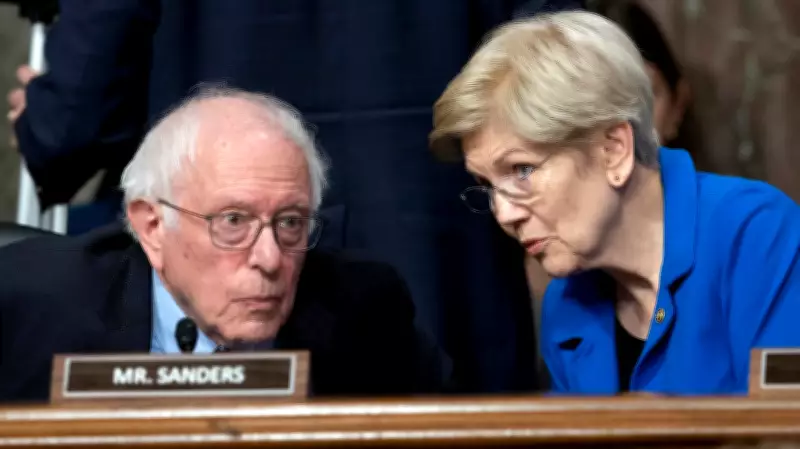
Senator Bernie Sanders, an independent from Vermont, who is preparing to introduce legislation that would ban the construction of data centers powering AI, expressed deep concerns in an interview. "The big money interests, the billionaires who control our economy and our political system, are going to do everything to elect people to give them a green light to go forward," he stated. "I happen to believe that Congress and the American people are totally unprepared for the transformational and radical impact it's going to have on our society."
Echoing these sentiments, Senator Elizabeth Warren, a Democrat from Massachusetts and a leading advocate for AI regulation, accused the industry of attempting "to make sure that they can continue doing whatever they want." She emphasized, "It's a problem," highlighting the growing tension between technological advancement and public oversight.

Lobbying Efforts Modeled After Crypto Campaigns
AI companies have adopted lobbying strategies similar to those used by cryptocurrency-backed groups, another powerful segment of the tech sector that heavily invested in the 2022 and 2024 elections. For instance, crypto super PACs spent tens of millions on advertisements to prevent Representative Katie Porter, a Democrat from California, from winning a Senate seat last year. They also targeted former Senator Sherrod Brown, a Democrat from Ohio, successfully ousting him in favor of crypto-friendly GOP businessman Bernie Moreno.
Now, the main pro-AI industry super PAC, Leading The Future, backed by OpenAI, has announced plans to allocate at least $100 million to support candidates who advocate for AI adoption with minimal regulatory hurdles. This group has already begun deploying resources in congressional races, spending $5 million to back Representative Byron Donalds' bid for governor in Florida and contributing $1 million to defeat Alex Bores, a Democratic assemblyman from New York who championed new industry rules, quickly making him a target.
Meanwhile, Anthropic, another AI firm founded by former OpenAI executives, revealed this week that it is investing $20 million in a separate super PAC focused on strengthening industry guardrails. This dueling approach among AI super PACs threatens to disrupt both political party coalitions and the tech industry itself.
Internal Divisions and Legislative Challenges
Senator Warren acknowledged the split within the industry, noting, "Those who have already followed a model of walled gardens, and there will be only two or three players in this space, want one kind of regulation, but those who are investing in the startups want something very different." She added, "But they're all here to try to buy advantage from a pliant Congress."
In recent developments, Warren met with the CEO of Anthropic, which supports limits on selling powerful chips necessary for AI to China. Alongside Senator Jim Banks, a Republican from Indiana, she has introduced legislation to restrict such sales. Concurrently, Senator Sanders is scheduled to travel to California next weekend, where he will engage with AI industry leaders and host a town hall at Stanford University with Representative Ro Khanna to discuss "who controls the future of AI."

Many Democrats have begun criticizing the rapid expansion of data centers ahead of the 2026 midterm elections, as voters attribute spiking electricity prices to the industry. Even moderate figures like Pennsylvania Governor Josh Shapiro are endorsing some limits on data center construction. However, Sanders emphasized that his concerns extend beyond economic issues. "What I am looking at right now goes beyond electric rates," he explained in a call with reporters. "It goes to who will control, essentially control, this transformative technology. Will it simply be Elon Musk? And Bezos and other multi-billionaires who will make huge amounts of money off of this. Or will AI and robotics work to improve life for human beings?"
Political Landscape and Regulatory Stalemate
The White House and the GOP-controlled Congress, bolstered by wealthy allies in Silicon Valley, have embraced a lax regulatory approach to AI, arguing that any attempts to establish guardrails could cause the United States to fall behind China in the AI development race. The Trump administration has mandated a government-wide deployment of AI while seeking to prevent individual states, frustrated by congressional inaction, from regulating the industry altogether.
Some populist Republicans and allies of former President Donald Trump have urged caution, warning of the economic repercussions of rapid AI adoption. Senator Josh Hawley, a Republican from Missouri, told HuffPost, "I don't think we are doing enough to protect workers. We need to do more because I'm confident Silicon Valley will get rich from this... But what about blue-collar workers in my state?"
Despite these concerns, the majority of Republicans continue to champion the AI race, even as industry experts issue increasingly alarming warnings about its swift advancement. Congress remains deadlocked, unable to agree on a regulatory framework, let alone pass actual legislation. The recent breakdown of negotiations over crypto legislation in the Senate underscores the challenges of enacting AI regulations, likely delaying any progress until after the November midterm elections and possibly the 2028 presidential election.
Senator Chris Murphy, a Democrat from Connecticut, highlighted this impasse at the Munich Security Conference, stating, "There obviously is an effective moratorium in the U.S. when it comes to interest in either domestic regulation or international regulation." He added, "The industry right now is spending millions of dollars trying to suppress conversations in the U.S at the state and federal level around a regulatory framework."
Murphy concluded, "So it becomes very difficult for any president to prioritize bringing this conversation to China or our allies abroad if hundreds of millions of dollars spent by AI companies and by technology companies are trying to destroy enthusiasm or conversation about regulation. That's the political reality."