AI-Enhanced Imagery Fuels Digital Chaos and Unfounded Allegations Following Minneapolis Violence
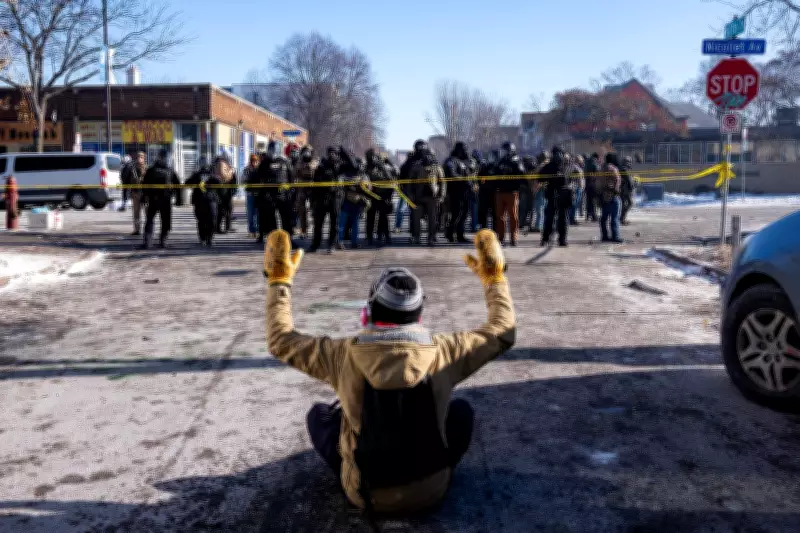
In the turbulent wake of recent shootings in Minneapolis, a dangerous new vector of misinformation has emerged, leveraging the power of artificial intelligence. According to digital forensics expert Giancarlo Fiorella, Director of Research at the open-source investigation group Bellingcat, AI-generated and "enhanced" images are being weaponized to falsely identify individuals, specifically ICE agents allegedly involved in the shooting of Renee Good. This phenomenon is not merely a technological curiosity but a serious societal threat, amplifying confusion and inciting baseless public accusations during a highly sensitive incident.
The Mechanics of Digital Deception
Fiorella explains that these manipulated visuals often appear convincing to the untrained eye. Using sophisticated AI tools, bad actors can alter photographs or create entirely synthetic images that purport to show specific persons at crime scenes or engaging in illicit activities. In the Minneapolis case, such fabrications have been circulated online, leading to the wrongful targeting of law enforcement personnel. This tactic exploits the public's trust in visual evidence, a trust that is increasingly misplaced in the age of accessible generative AI.
The consequences are immediate and severe. False accusations can ruin reputations, incite harassment, and divert attention and resources from legitimate investigations. For the victims of violence and their families, this digital noise compounds their trauma, muddying the waters of truth and justice. It represents a direct assault on the integrity of public discourse and the judicial process.

A Broader Trend in Misinformation Warfare
This incident is not isolated. It fits into a disturbing global pattern where AI-generated content is used to manipulate public opinion, especially around polarizing events. From elections to armed conflicts, synthetic media is becoming a standard tool for those seeking to sow discord. The Minneapolis shootings case underscores how quickly these technologies can be deployed to exploit real-world tragedies, turning moments of public seeking for answers into festivals of falsehood.
Experts warn that the public and media must cultivate a new literacy. Critical assessment of digital imagery is no longer optional; it is a necessary skill. Verifying sources, checking for digital artifacts, and consulting forensic analysts like those at Bellingcat are becoming essential steps before sharing or acting on visual claims. The speed of social media often outpaces careful verification, making the spread of such AI-facilitated falsehoods alarmingly efficient.
The Path Forward: Vigilance and Regulation
Addressing this challenge requires a multi-faceted approach. Technologically, there is a push for better detection tools and watermarking standards to identify AI-generated content. Legally and socially, there is a growing conversation about accountability for those who maliciously create and disseminate deceptive synthetic media with the intent to harm. Public education campaigns are also crucial to help citizens understand the capabilities and limitations of modern AI.
The confusion following the Minneapolis shootings serves as a stark warning. As AI tools become more powerful and user-friendly, the potential for their misuse in distorting reality grows exponentially. Society stands at a crossroads, where the very tools that can enhance creativity and efficiency are also being forged into weapons of information warfare. The case highlighted by Giancarlo Fiorella is a clarion call for heightened digital vigilance, robust forensic journalism, and a collective commitment to defending truth in an increasingly synthetic visual landscape.