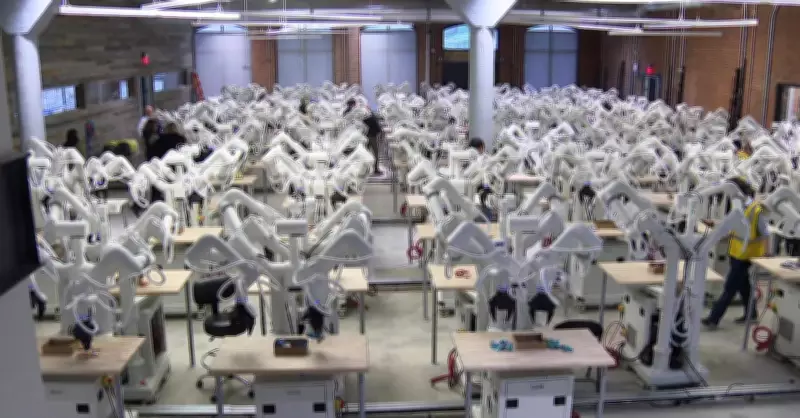
In a breakthrough for artificial intelligence and robotics, AI-powered robots are now learning to perform simple human tasks at a factory in Massachusetts. The initiative is spearheaded by Tutor Intelligence, a company co-founded by Josh Gruenstein and Alon Kosowsky-Sachs, both alumni of the Massachusetts Institute of Technology's Computer Science and Artificial Intelligence Laboratory (CSAIL).
How Robots Are Learning Human Tasks
The robots are being trained to handle routine operations that typically require human dexterity and decision-making. Using advanced machine learning algorithms, they can adapt to new tasks without extensive reprogramming. This marks a significant step toward integrating AI into manufacturing environments.
The Technology Behind Tutor Intelligence
Tutor Intelligence leverages cutting-edge AI research from MIT CSAIL. The co-founders have developed a system that allows robots to learn from demonstration and practice, reducing the need for manual coding. This approach aims to make robotics more accessible for small and medium-sized factories.

According to the company, the robots are currently performing tasks such as assembly, packaging, and quality inspection. The goal is to free up human workers for more complex responsibilities while increasing efficiency.
Implications for the Future of Work
This development raises questions about the future of employment in manufacturing. While some fear job displacement, Tutor Intelligence emphasizes that their technology is designed to augment human labor, not replace it. The company envisions collaborative robots working alongside people to enhance productivity.
Industry experts note that such advancements could help address labor shortages in manufacturing. However, they also stress the need for retraining programs to prepare workers for an AI-driven economy.
The Massachusetts factory serves as a testbed for these technologies, with plans to expand to other facilities across the United States and Canada. As AI robotics continue to evolve, their impact on industries from automotive to electronics is expected to grow.