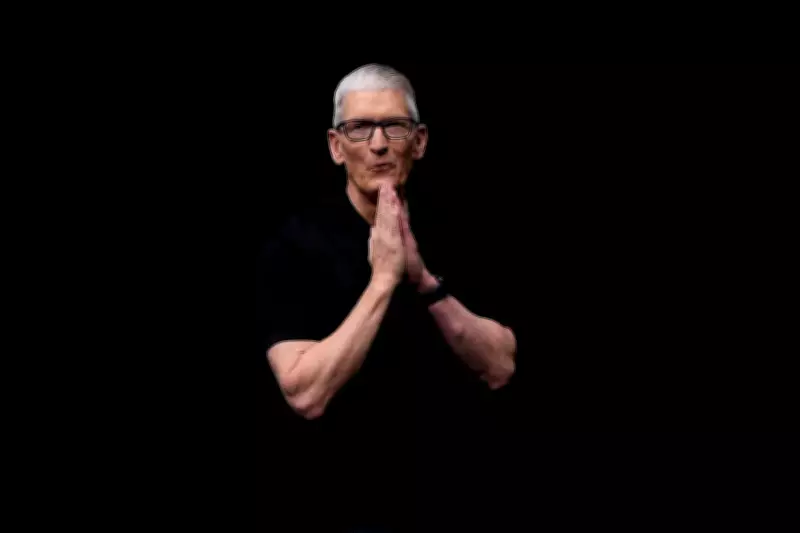
As Apple Inc. prepares for a significant leadership transition, the tech giant's trajectory in the coming years will be heavily influenced by its ability to harness artificial intelligence under new guidance. According to a recent Reuters report, the post-Cook era at Apple hinges critically on whether John Ternus, a key executive, can ignite substantial growth in AI technologies.
A Pivotal Moment for Apple's Leadership
Tim Cook, who has served as Apple's CEO since 2011, is set to step down, marking the end of an era defined by remarkable product evolution and financial success. Under Cook's stewardship, Apple became the first company to reach a $3 trillion market valuation, largely driven by the iPhone, services, and wearables. However, the competitive landscape is shifting rapidly, with rivals like Google and Microsoft making aggressive strides in artificial intelligence.
The AI Imperative for Future Growth
Artificial intelligence is no longer a peripheral concern but a central battleground for tech supremacy. Apple has integrated AI into features like Siri, facial recognition, and computational photography, but analysts argue that more profound, transformative AI applications are needed to maintain its innovative edge. The company's future growth, particularly in emerging markets and new product categories, may depend on breakthroughs in machine learning, natural language processing, and autonomous systems.

John Ternus, Apple's senior vice president of hardware engineering, is seen as a pivotal figure in this transition. Having overseen the development of key products including the iPhone, iPad, and Mac, Ternus brings a deep understanding of Apple's hardware-software integration. His challenge will be to align this expertise with ambitious AI initiatives, potentially involving next-generation devices, enhanced user experiences, and enterprise solutions.
Challenges and Opportunities in the AI Race
The pressure is mounting as competitors leverage AI to redefine industries. Microsoft's partnership with OpenAI and Google's advancements in generative AI have set high benchmarks. For Apple, catching up requires not only technological innovation but also strategic acquisitions, talent recruitment, and perhaps a more open approach to collaboration.
Industry observers note that Apple's traditionally secretive culture could be both a strength and a hindrance. While it fosters focused development, it may slow the pace of AI adoption compared to more agile rivals. Ternus will need to balance this secrecy with the urgency to deploy AI at scale, ensuring that Apple's ecosystem remains cohesive and user-friendly.
Potential Impact on Product Development
Looking ahead, AI could revolutionize Apple's product lineup in several ways:
- Enhanced Personalization: AI-driven features that anticipate user needs across devices, creating a more intuitive and seamless experience.
- Health and Wellness Innovations: Advanced sensors and algorithms in wearables like the Apple Watch, offering deeper health insights and preventive care.
- Autonomous Technology: Progress in self-driving systems for potential future vehicles or robotics, though this remains a long-term prospect.
- Sustainability Initiatives: AI optimizing energy use in products and supply chains, aligning with Apple's environmental goals.
The success of these endeavors will largely depend on Ternus's ability to foster a culture of innovation while maintaining Apple's core values of design excellence and privacy. As Reuters highlights, his leadership in AI could determine whether Apple continues to set industry trends or risks falling behind in the next technological wave.