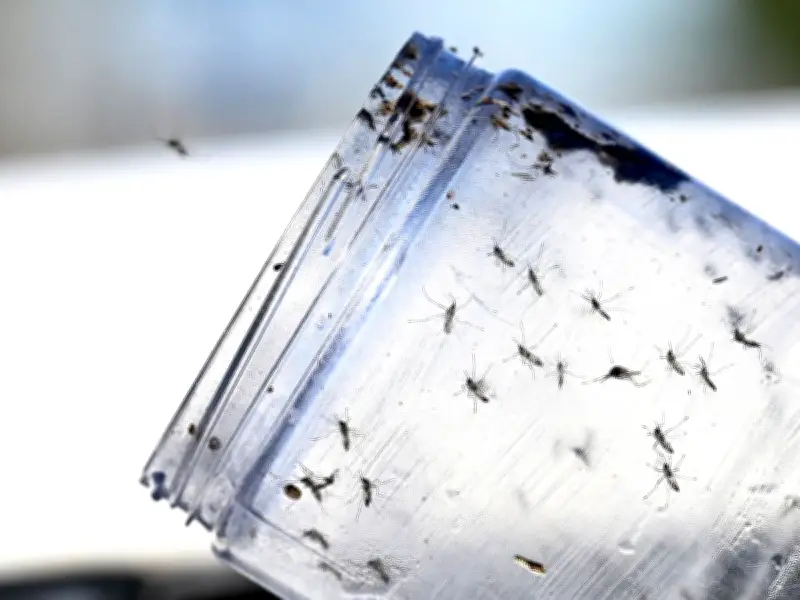
Google is seeking U.S. government approval to release 32 million mosquitoes in California and Florida over the next two years as part of an AI-driven health initiative called the Debug Project. The goal is to control mosquito populations and reduce mosquito-borne diseases such as dengue and Zika.
What Is the Debug Project?
The Debug Project aims to breed and release sterile male mosquitoes to reduce populations of disease-carrying species. Using a combination of engineering, artificial intelligence, and data systems, the project addresses a large-scale biological problem. The male mosquitoes carry a naturally occurring bacteria called Wolbachia, which prevents them from producing offspring with females. Over time, this reduces the number of disease-spreading mosquitoes.
Why Sterile Male Mosquitoes?
Male mosquitoes do not bite or spread disease, making them safe for release. The U.S. Environmental Protection Agency (EPA) acknowledges that male-only releases pose no risk to people, animals, or the environment. The technique uses no chemicals, toxins, or genetic modification. The Debug Project team states: “Bad mosquitoes spread disease. Good mosquitoes can stop them.”

EPA Review and Public Comment
The EPA is reviewing Google’s request for an experimental-use permit to release up to 16 million mosquitoes annually. The public comment period ends on June 5, after which the EPA will decide on approval. The project targets the Aedes aegypti mosquito, which carries diseases like dengue, Zika, yellow fever, and chikungunya.
Background and Benefits
Mosquitoes kill more people than any other animal. Many mosquito-borne diseases lack effective vaccines or treatments. Pesticides lose effectiveness over time and can be toxic. The Debug Project offers a sustainable alternative. Originally developed by Verily (formerly Google Life Sciences), a subsidiary of Alphabet, the project was acquired by Google in December 2024.
The Debug team emphasizes that the technique uses naturally occurring bacteria and is environmentally friendly. They aim to work with communities to demonstrate that releasing enough “good bugs” can significantly impact mosquito populations and disease transmission, ultimately helping millions live healthier lives.
While it may seem unusual for a tech company to focus on biological pests, Google’s initiative leverages AI and data science to tackle global health challenges. The project represents a novel approach to public health and vector control.