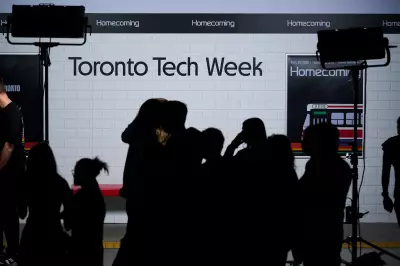
Prominent technology leaders gathered at a major Toronto conference this week have pushed back against growing concerns about an artificial intelligence market bubble, arguing that the sector's growth remains fundamentally sound despite rapid valuation increases.
Conference Optimism Defies Market Skepticism
The discussions took place against the backdrop of Nvidia's continued strong performance in the AI hardware sector, with the company's signage prominently displayed at recent industry events including the All In AI conference in Montreal this past September. Industry veterans at the Toronto gathering emphasized that unlike previous technology bubbles, current AI advancements are delivering tangible business value across multiple sectors.
Several executives pointed to concrete applications in healthcare, manufacturing, and financial services that are already generating operational efficiencies and revenue growth. This practical implementation, they argued, distinguishes the current AI boom from historical speculative frenzies where technology failed to deliver real-world results.

Sustained Growth Versus Speculative Hype
While acknowledging that some AI startups may be overvalued, conference participants stressed that the core technology continues to evolve at a remarkable pace. The maturity of machine learning frameworks and the availability of massive computing power through cloud services have created a more stable foundation for long-term development than during previous technology cycles.
Investment in AI infrastructure continues to show strong returns, with companies like Nvidia reporting consistent earnings growth that supports their market valuations. This contrasts with the dot-com era where many companies had inflated valuations despite lacking sustainable business models.
Balancing Enthusiasm with Practical Realism
Despite their overall optimism, tech leaders did acknowledge the need for measured expectations. They cautioned that while AI presents tremendous opportunities, not every company branding itself as an "AI company" will succeed. The consensus emphasized focusing on companies solving specific business problems rather than those simply riding the AI trend.
The Toronto conference highlighted Canada's growing role in the global AI ecosystem, with several homegrown companies demonstrating innovative applications. This domestic strength, combined with continued international investment, suggests the AI sector in Canada may be better positioned for sustained growth than critics anticipate.
As the technology continues to mature, industry leaders expressed confidence that the current expansion phase represents the beginning of a longer transformation rather than a short-term bubble. The coming years will test these predictions, but for now, the mood in Toronto's tech community remains decidedly bullish on AI's future.