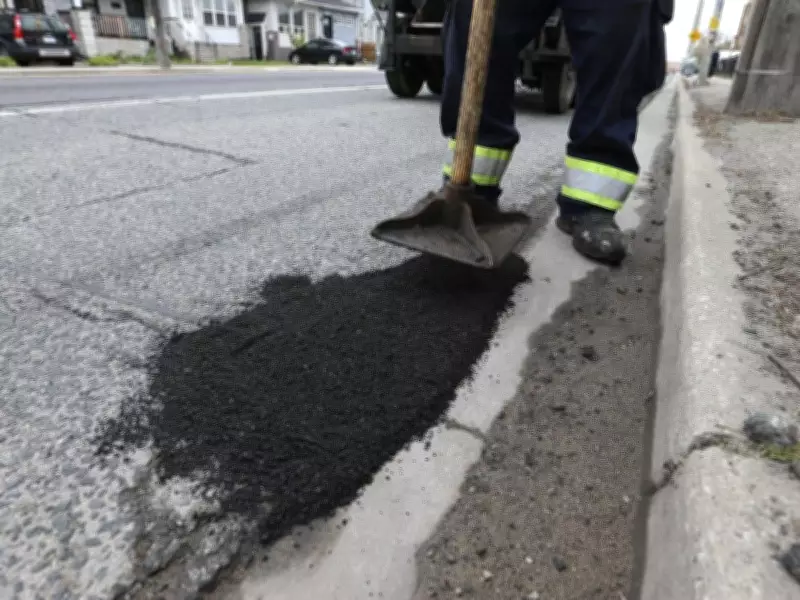
Toronto Employs AI to Accelerate Pothole Repairs Amid Harsh Winter Conditions
The City of Toronto is seeking to leverage artificial intelligence in a strategic move to expedite pothole repairs across its extensive road network. This initiative comes in response to a particularly challenging winter season characterized by severe freeze and thaw cycles that have significantly increased road deterioration.
Executive Committee Approves AI Pilot Program
At a recent executive committee meeting convened by Mayor Olivia Chow, Councillor Paul Ainslie introduced a motion to accelerate the city's chatbot and artificial intelligence pilot program integrated with the 311 service. The proposed data-driven pothole blitz strategy aims to enhance repair efficiency without incurring additional costs for the municipality, with potential implementation within a week. The committee voted to advance this motion to the full city council for further consideration.
Surge in Pothole Reports and Repairs
Mayor Chow highlighted that road repairs and pothole blitzes have seen a 44% increase since 2022, directly attributed to the harsh winter weather. Councillor Amber Morley raised concerns after the city received 6,839 public reports of potholes in a single month, nearly five times the 1,400 reports documented in February 2025. City staff explained that fluctuating temperatures allow water to infiltrate asphalt cracks, freeze beneath the surface, and expand, leading to accelerated road degradation under constant traffic pressure.

"When spring comes, people really definitely notice it," remarked Councillor Paula Fletcher. "It's been a particularly difficult winter." Despite the spike in reports, the city's proactive inspection teams repaired over 257,000 potholes in 2025, far exceeding the 11,325 reports received through 311. On a recent Sunday alone, approximately 3,000 potholes were addressed.
Proactive Inspection and Repair Protocols
City staff emphasized that roads are routinely inspected for potholes by municipal workers, who either mark smaller holes for future repair or fill larger ones immediately. Repair prioritization is based on pothole size:
- Priority one potholes, larger than a shoebox, are repaired within 24 hours of notification.
- Smaller potholes are addressed within a two-week timeframe.
Hotspots identified through historical data and 311 calls receive focused attention, but all roads undergo regular inspections to ensure comprehensive maintenance across Toronto's 5,600-kilometre network.
Additional Challenges and Future Initiatives
Councillor Fletcher pointed out that potholes along TTC streetcar tracks pose particular risks to rail integrity. She also requested a staff report on utility cuts made by water, hydro, gas, and telecommunications companies, suggesting that these interventions may contribute to pothole formation. Fletcher cited a large pothole on Dundas Street, comparing it to an "Amazon delivery box" in size, underscoring the severity of the issue.
In 2025, only about 18 kilometres of roads were repaved. Mayor Chow is advocating for expanded resurfacing efforts, supported by an $11 million allocation in the 2026 budget to enhance local road rehabilitation projects.