Trump's Late-Night Posting Spree Raises Psychological Questions
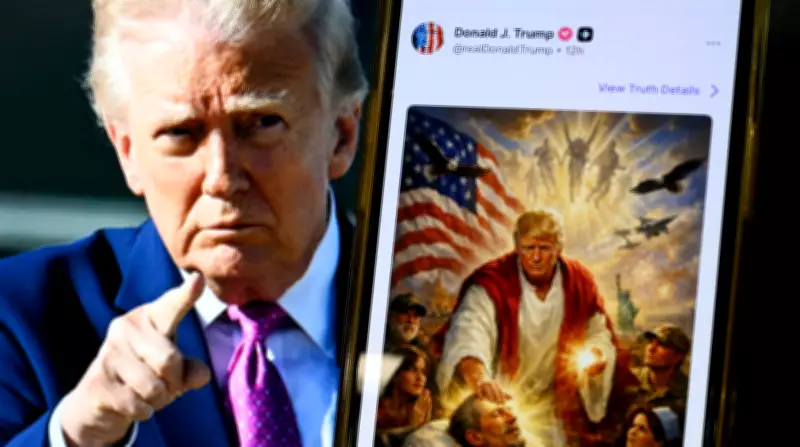
Between 6 p.m. Thursday and 8 a.m. Eastern on Friday, President Donald Trump posted and reposted 24 times on Truth Social. While the president is known for his affinity for the platform, experts suggest that such frequent overnight posting may reveal more than he intends.
Psychological Insights from Experts
Greg Kushnick, a psychologist specializing in cognitive behavioral therapy, told HuffPost that from a secure marketing perspective, Trump is obtaining the attention he constantly craves. Kushnick, who is not diagnosing Trump but basing his assessment on general behavioral studies and patient experience, noted that posting at night and having people wake up to his messages allows Trump to control the news cycle. He added that if the posts did not garner attention, Trump would likely post less frequently.
Thursday night's posts included calls for Senate Minority Leader Chuck Schumer to resign, multiple accusations of treason against former President Barack Obama and former Secretary of State Hillary Clinton, a falsely attributed quote to actor Clint Eastwood, and updates on his efforts to end birthright citizenship.

Historical Context and Changing Messaging
This behavior is not new. In 2017, Trump credited social media with helping him win the 2016 election by consistently delivering his message to voters. Michael Genovese, a professor of political science and international relations, noted that Trump initially used social media innovatively to bypass traditional media and directly engage the public. However, Genovese argued that Trump's messages have evolved, and voters are increasingly concerned. Early on, Trump was colorful and creative, but now his posts are becoming scary and threatening.
Truth Social as an Echo Chamber
Truth Social, owned by Trump Media & Technology Group, functions as an echo chamber for the president. Psychotherapist Manahil Riaz described it as an environment where people consume information that reinforces their existing beliefs. With 6 million monthly active users in 2024 compared to X's 557 million and Facebook's 3 billion, Truth Social ensures Trump gets the reaction he desires, according to Kushnick.
Late-Night Posting Patterns
While Trump posts more often during the day, particularly between 5 p.m. and 6 p.m. Eastern, data shows over 300 posts at midnight and 100 at 1 a.m. between January 2025 and January 2026. In December alone, he posted 158 times between midnight and 3 a.m., as reported by Axios. White House press secretary Karoline Leavitt stated that Trump sleeps very little, around four hours a night, and often calls at odd hours. Former White House physician Dr. Ronny Jackson confirmed in 2018 that Trump sleeps only four to five hours nightly.
Psychological Drivers
Kushnick theorizes that late-night hours, when Trump is alone and advisers are off duty, allow him to post without external influence, asserting his authority. He describes this as pathological certainty, a compulsive state where beliefs go unchallenged. The Mind After Midnight hypothesis links nocturnal wakefulness to impaired decision-making, increased need for attention, and limited emotional regulation.
Validation Through Social Media
Trump has posted nearly 7,000 times on Truth Social in the past year and 590 times in April. Frequent posting provides pseudo-validation, Kushnick said, driven by the Slot Machine Effect, where unpredictable likes and comments trigger dopamine spikes. Genovese believes that with declining poll numbers, Trump may be experiencing more anger and frustration than in his first term, leading to unfiltered outbursts. He compared this to President Richard Nixon's aides allowing him to vent frustrations privately during Watergate. Experts conclude that as long as the posts attract attention, the behavior is unlikely to change.