University of Waterloo Engineering Team Unveils Revolutionary Firefighting Drone
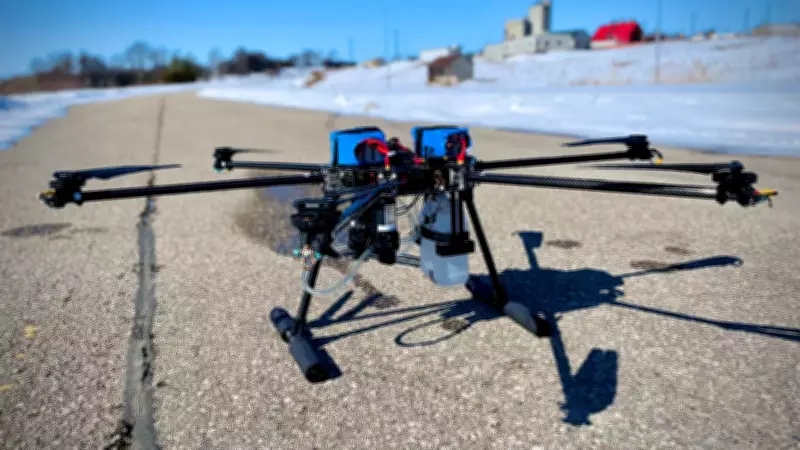
A groundbreaking firefighting drone, meticulously designed and constructed by a dedicated team of engineering students from the University of Waterloo, has been successfully developed and photographed during field tests in Wilmot Township. This innovative aerial device represents a significant leap forward in emergency response technology, specifically engineered to assist firefighters in combating dangerous blazes more effectively and safely.
Student-Led Innovation in Emergency Response
The drone project, spearheaded by undergraduate and graduate students within Waterloo's renowned engineering faculty, focuses on creating a robust unmanned aerial vehicle (UAV) equipped with specialized capabilities for fire suppression and situational awareness. The primary objective is to enhance firefighter safety by allowing remote assessment and initial attack on fires, particularly in hazardous or inaccessible environments. This initiative underscores the university's commitment to fostering practical, real-world problem-solving through hands-on student projects.
Technical Capabilities and Operational Features
The drone is reported to incorporate several advanced features tailored for firefighting missions:

- Thermal Imaging Cameras: To detect heat sources and identify hotspots through smoke, providing critical data to ground crews.
- Payload Delivery Systems: Capable of carrying and deploying fire-retardant chemicals or water in targeted areas to suppress flames.
- Real-Time Data Transmission: Sends live video and sensor data to command centers, enabling informed decision-making during emergencies.
- Durable Construction: Designed to withstand high temperatures and turbulent air conditions common in fire zones.
This technology could prove invaluable for both urban fire departments and wildland firefighting agencies, offering a versatile tool for rapid response.
Field Testing and Future Development
The recent photography session in Wilmot Township on March 1, 2026, captured the drone in action, demonstrating its flight stability and operational readiness. These tests are crucial for validating the drone's performance under realistic conditions and gathering data for further refinements. The student team is actively collaborating with local fire services and industry partners to explore integration into existing emergency protocols and to secure funding for scaling production.
Looking ahead, the developers aim to enhance the drone's autonomy, increase its payload capacity, and improve its battery life for extended missions. Potential applications extend beyond firefighting to include search-and-rescue operations, hazardous material monitoring, and disaster assessment, showcasing the broad impact of this student-led innovation.