Historic Launch Paves Way for Mars and Moon Exploration
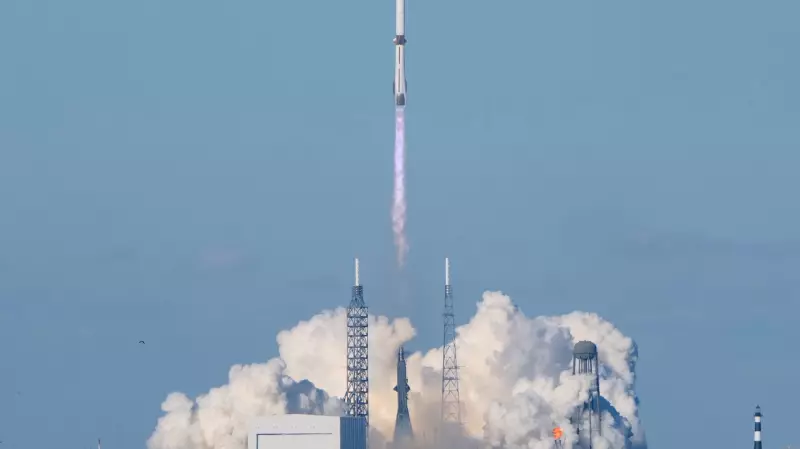
In a landmark achievement for private spaceflight, Blue Origin successfully launched its massive New Glenn rocket on Thursday, November 13, 2025, from Cape Canaveral Space Force Station in Florida. The mission carried a critical payload: a pair of NASA spacecraft destined to study Mars. This represents only the second flight for the powerful new rocket, a vehicle that both Blue Origin and NASA are relying on for future crewed and cargo missions to the moon.
A Flawless Mission After Weather Delays
The 321-foot (98-meter) rocket blasted into the afternoon sky after a four-day delay caused by poor local weather and intense solar storms, which created auroras visible as far south as Florida. The launch was a complete success, a significant rebound from its inaugural test flight in January which, while delivering a prototype satellite to orbit, failed to recover the booster.
In a pivotal moment for the company's reusability efforts, Blue Origin successfully recovered the rocket's booster after it separated from the upper stage. Employees in Launch Control, including an ecstatic founder Jeff Bezos, cheered wildly as the booster made a bull's-eye, upright landing on a barge stationed 375 miles (600 kilometers) offshore in the Atlantic Ocean. This accomplishment is an essential step towards recycling hardware and slashing costs, a practice pioneered by rival SpaceX.

Next Stop: Mars in 2027
Approximately twenty minutes after liftoff, the rocket's upper stage successfully deployed the two identical Mars orbiters, named Escapade, into space. This fulfilled the mission's primary objective. The spacecraft will now begin a unique, year-long journey, positioning themselves nearly one million miles (1.5 million kilometers) from Earth. They will wait until Earth and Mars are properly aligned in the fall of 2026, at which point they will use a gravity assist from Earth to slingshot towards the Red Planet, with an expected arrival in 2027.
Once in orbit around Mars, the Escapade mission will provide an unprecedented stereo viewpoint to map the planet's upper atmosphere and scattered magnetic fields. Scientists, led by principal investigator Rob Lillis of UC Berkeley, aim to understand how these regions interact with the solar wind. This research is crucial for explaining how Mars transformed from a warm, wet world into the dry and dusty planet it is today. The data will also help experts learn how to better protect future astronauts from Mars' harsh radiation environment.
Affordable Science and Lunar Ambitions
The Escapade mission is a relatively low-budget project, costing under $80 million, and is managed and operated by UC Berkeley. NASA saved money by booking a ride on one of New Glenn's early flights, though it had initially passed up a more ideal launch window in 2024 due to concerns about delays with the new rocket.
Named after John Glenn, the first American to orbit Earth, the New Glenn is a cornerstone of Blue Origin's ambitious plans. The company, founded by Jeff Bezos in 2000, already holds a NASA contract for the third Artemis moon landing. The success of this launch intensifies the ongoing lunar race with SpaceX, especially after NASA recently reopened the contract for the *first* crewed moon landing due to concerns about the progress of SpaceX's Starship. Both companies have now presented accelerated landing plans to NASA.
Looking ahead, Blue Origin plans to launch a prototype Blue Moon lunar lander on a demonstration mission aboard a New Glenn rocket in the coming months, bringing its slogan of Next stop, moon! one step closer to reality.