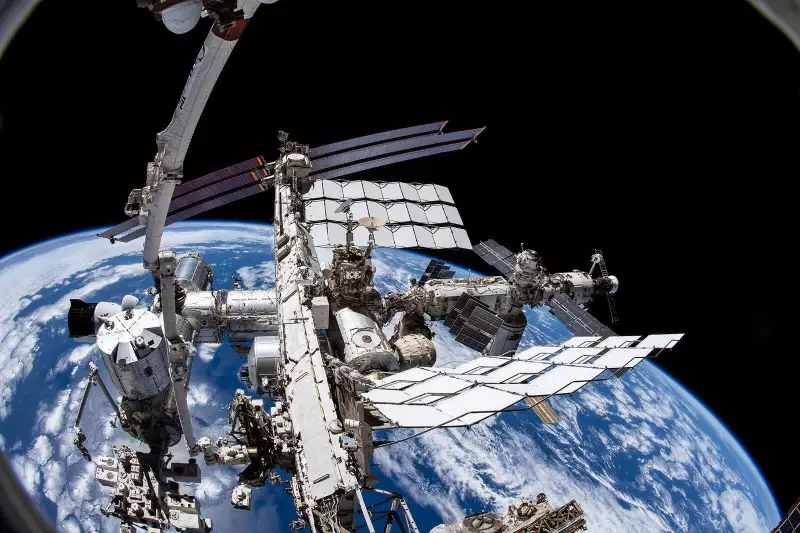
A NASA crew stationed aboard the International Space Station (ISS) is set for an unusual and early return to Earth, the agency confirmed, following the emergence of a medical issue affecting one of its astronauts. The decision underscores the inherent risks and challenges of long-duration spaceflight.
Unplanned Mission Change
The announcement, made public on January 10, 2026, marks a significant deviation from the crew's original mission timeline. While NASA has not disclosed the specific nature of the medical condition, citing privacy concerns, it confirmed the situation is serious enough to warrant an expedited departure from the orbiting laboratory. The crew's return vehicle is being prepared for an undocking and re-entry sequence ahead of schedule.
Such early returns are exceptionally rare in the history of the ISS program, highlighting the robust medical protocols and contingency plans in place. The health and safety of crew members remain the paramount priority for all space agencies involved in the station's operations.

Protocols and Preparedness in Space
The ISS is equipped with extensive medical facilities, including a Crew Medical Officer among the astronauts and advanced telemedicine capabilities that allow ground-based doctors to consult on conditions in real-time. However, some situations may require resources or a treatment environment only available on Earth.
The incident brings into focus the physiological strains of spaceflight, which include exposure to radiation, the effects of microgravity on bone density and muscle mass, and fluid shifts in the body. NASA and its international partners continuously research these effects to protect astronaut health on future missions to the Moon and Mars, which will involve even longer periods away from Earth.
Implications and Next Steps
The early return will necessitate adjustments to the planned scientific research and maintenance activities aboard the ISS. Experiments that required the specific crew's involvement may be postponed or adapted for future astronauts. NASA stated that mission control is working to minimize the disruption to the station's ongoing operations.
Upon a safe splashdown and recovery, the astronaut involved will receive immediate and comprehensive medical evaluation and care. The agency typically conducts detailed reviews after any significant in-flight anomaly to learn from the event and improve future mission safety.
This event serves as a stark reminder that despite decades of experience, human space exploration remains a demanding frontier. The ability to adapt and respond to unforeseen medical emergencies is a critical component of ensuring astronauts can live and work in the harsh environment of space.