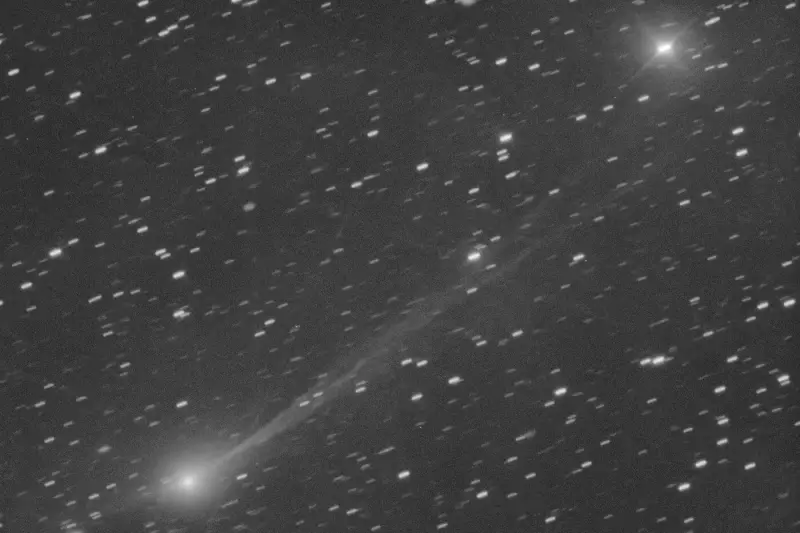
In a groundbreaking astronomical revelation, NASA has released unprecedented close-up photographs of an interstellar comet currently passing through our solar system. The images capture comet 3I/Atlas as it journeys through space approximately 190 million miles from Earth.
Historic First Images of Cosmic Visitor
The newly revealed pictures represent some of the most detailed observations ever made of an object originating from beyond our solar system. Captured on Wednesday, November 19, 2025, these images provide scientists with valuable data about the composition and behavior of interstellar visitors.
Astronomer Gianluca Masi obtained the remarkable photograph from his observation post in Manciano, Italy. The image shows the comet as a bright streak against the backdrop of space, offering a rare glimpse of this temporary guest from another star system.

Scientific Significance of the Discovery
This celestial event marks only the third confirmed interstellar object detected passing through our solar system, following the discoveries of 'Oumuamua in 2017 and comet Borisov in 2019. The comet is currently located about 190 million miles from Earth, providing a safe distance for detailed observation while remaining visible to powerful telescopes.
Researchers worldwide are eagerly analyzing the new data, which could reveal crucial information about the formation of planetary systems beyond our own. The comet's trajectory, speed, and chemical signature all provide clues about its origin and the conditions in its home star system.
Future Research Opportunities
NASA and international space agencies continue to monitor 3I/Atlas as it travels through our cosmic neighborhood. The detailed images will help astronomers better understand how common such interstellar visitors might be and what they can teach us about the broader universe.
The successful imaging of this comet demonstrates significant advances in space observation technology, particularly in tracking fast-moving objects at great distances. This capability will prove essential for future discoveries and potentially for planetary defense against objects on collision courses with Earth.
As the comet continues its journey through our solar system before eventually returning to interstellar space, astronomers remain poised to capture additional data that could reshape our understanding of cosmic formation and evolution.