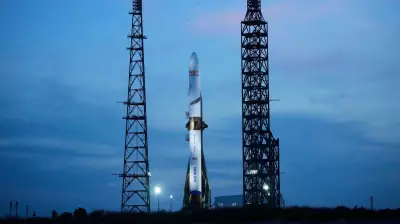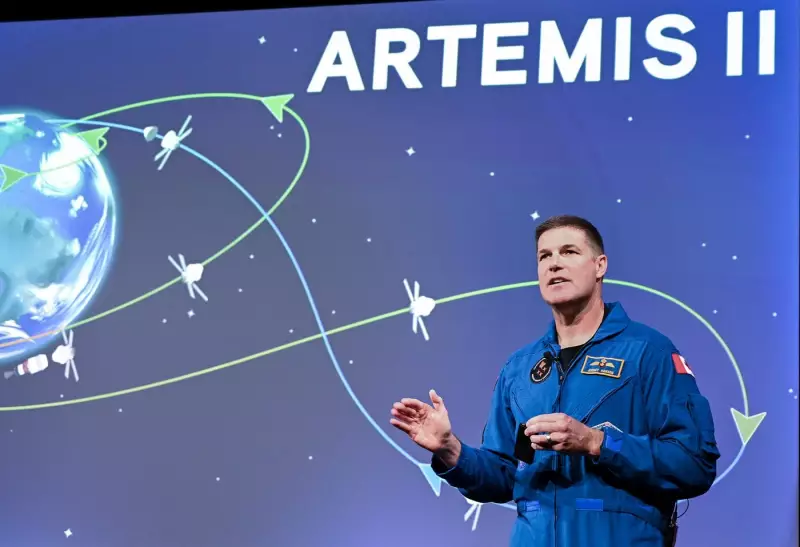
The National Aeronautics and Space Administration (NASA) has unveiled its preliminary launch schedule for the highly anticipated Artemis II mission, a pivotal flight that will carry a Canadian astronaut around the Moon. The space agency is targeting launch opportunities beginning in late 2026, marking a significant step in humanity's return to lunar exploration.
A Historic Crew for a Historic Mission
This mission will be the first crewed flight of NASA's Orion spacecraft and the powerful Space Launch System (SLS) rocket. On board will be a four-person crew, including Canadian Space Agency astronaut Jeremy Hansen. His participation is part of Canada's contribution to the Artemis program through the development of the Canadarm3 robotic system for the Lunar Gateway. Hansen, alongside three NASA astronauts, will embark on a roughly 10-day mission that will see them fly around the Moon without landing, testing critical systems for future lunar surface missions.
The announcement follows a series of technical reviews and the successful uncrewed Artemis I test flight. NASA officials emphasized that the identified dates are potential launch windows, and the final schedule will depend on the readiness of all hardware, systems, and crew training milestones.

What the Artemis II Mission Entails
The Artemis II journey represents a monumental leap. After launch from Kennedy Space Center in Florida, the crew will orbit Earth to check systems before firing Orion's engines to set course for the Moon. Their trajectory will take them thousands of kilometers beyond the lunar far side—farther into space than any humans have ever traveled.
The primary objectives for the crew include:
- Demonstrating the life support, communication, and navigation systems of the Orion spacecraft with astronauts aboard.
- Proving that the spacecraft's systems can operate safely in deep space and return the crew to Earth at high re-entry speeds.
- Conducting vital operational tests and scientific observations from a unique vantage point.
This mission paves the way for Artemis III, which is planned to land the first woman and the next man on the lunar surface later this decade.
Canada's Role in Lunar Exploration
Jeremy Hansen's seat on this mission is a direct result of Canada's strategic partnership in the Artemis program. The country is providing the advanced Canadarm3, a smart robotic system for the Lunar Gateway, a small space station that will orbit the Moon and support sustainable exploration.
"This is a historic moment for Canada," said a Canadian Space Agency spokesperson following NASA's announcement. "Having a Canadian astronaut on this pioneering mission to the Moon underscores our nation's leadership in space robotics and our commitment to international space exploration." Hansen, a former Royal Canadian Air Force fighter pilot selected as an astronaut in 2009, has been in intensive training for this assignment.
While the exact launch date within the late 2026 window will be finalized closer to the mission, the release of these target dates provides a clear timeline for this next giant leap. The world will watch as an international crew, including a representative from Canada, once again sets its sights on the lunar horizon.