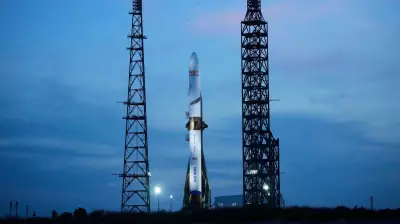
NASA's Jared Isaacman Unveils Ambitious Plans for Moon Bases and Mars Missions
NASA executive Jared Isaacman has revealed comprehensive new strategies for establishing permanent lunar bases and accelerating missions to Mars, signaling a bold new chapter in human space exploration. The announcement, made on March 31, 2026, outlines a multi-phase approach that could see sustained human presence on the moon within the next decade and crewed Mars missions following shortly thereafter.
Expanding Human Presence Beyond Earth
Isaacman's vision represents a significant expansion of NASA's Artemis program, which initially focused on returning humans to the lunar surface. The new plans call for establishing multiple permanent moon bases that would serve as research stations, resource extraction centers, and launch platforms for deeper space missions. These lunar outposts would be strategically positioned to maximize scientific discovery and operational efficiency.
The moon bases are envisioned as stepping stones for Mars exploration, providing crucial testing grounds for technologies and systems needed for the longer journey to the Red Planet. Isaacman emphasized that lessons learned from sustained lunar operations would directly inform Mars mission planning, reducing risks and increasing the likelihood of success for interplanetary travel.

Technical Innovations and Timeline
The proposed expansion relies on several key technological advancements currently in development:
- Advanced life support systems capable of sustaining crews for extended periods
- In-situ resource utilization technologies to extract water and oxygen from lunar regolith
- Next-generation propulsion systems for efficient Earth-Moon and Moon-Mars transit
- Autonomous construction systems for building lunar habitats
While specific timelines remain flexible based on funding and technical progress, Isaacman indicated that initial moon base construction could begin as early as 2030, with the first permanent crew arriving by 2032. Mars missions would follow in the late 2030s, building on the infrastructure and experience gained from lunar operations.
International Collaboration and Commercial Partnerships
The plans emphasize increased international cooperation and commercial involvement in space exploration. Isaacman highlighted opportunities for partner nations to contribute modules, technologies, and crew members to both lunar and Mars initiatives. Commercial space companies are expected to play crucial roles in transportation, habitat construction, and resource development under NASA's oversight.
This collaborative approach aims to distribute costs and expertise while accelerating progress through parallel development efforts. The strategy represents a departure from earlier, more NASA-centric models of space exploration toward a more distributed, international framework.
Scientific and Economic Implications
The expanded exploration agenda promises significant scientific returns, including:
- Unprecedented geological studies of the moon's surface and subsurface
- Astronomical observations from the moon's far side, free from Earth's radio interference
- Testing of technologies for future Mars settlement
- Studies of long-term human adaptation to reduced gravity environments
Economically, the initiatives could spur development of new space industries, from lunar mining to space tourism, while creating thousands of high-tech jobs on Earth. The plans also address growing international competition in space, positioning the United States and its partners as leaders in the new space economy.
As NASA moves forward with these ambitious plans, the agency faces challenges including securing sustained funding, managing technical risks, and maintaining public support over decades-long timelines. However, Isaacman expressed confidence that the vision for moon bases and Mars missions represents humanity's next logical step into the solar system.