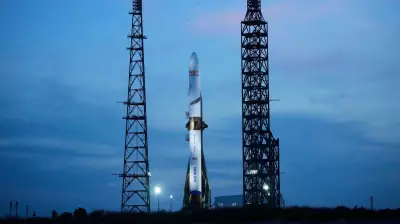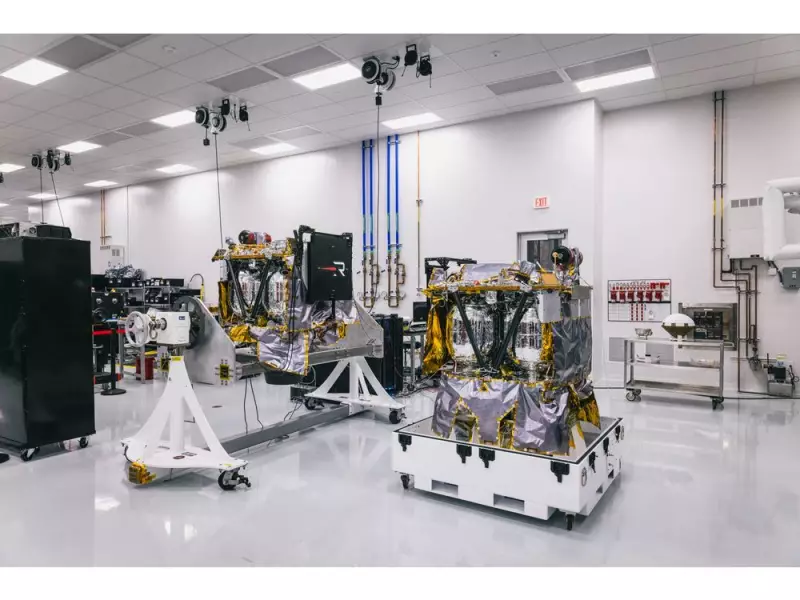
In a significant advancement for planetary science, two spacecraft built by Rocket Lab have successfully begun their journey to Mars as part of NASA and University of California Berkeley's ESCAPADE mission. The twin satellites launched aboard a Blue Origin rocket on November 13, 2025, from Cape Canaveral Space Force Station at 3:55 p.m. EST.
Mission Success and Initial Operations
Rocket Lab has confirmed that both spacecraft are functioning properly in orbit, with successful power generation and communication established. The company's operations team has begun the commissioning process, which includes critical early operations such as orientation stabilization and solar array deployment.
Over the coming days, the team will systematically activate and test all spacecraft systems, including flight computers, multiple antennas, guidance and navigation sensors, actuators, and the propulsion system. These checks will prepare the spacecraft for their first trajectory maneuvers toward the Red Planet.

Innovative Approach to Mars Exploration
The ESCAPADE mission represents a new paradigm in interplanetary science. Rocket Lab's Explorer-class spacecraft platform completed the journey from contract award to launch in just three and a half years - an exceptionally aggressive timeline for a Mars mission.
This accelerated schedule was made possible by Rocket Lab's vertically integrated supply chain, which brings the production of critical components including solar arrays, reaction wheels, propellant tanks, star trackers, radios, avionics, and flight software entirely in-house.
Sir Peter Beck, Founder and CEO of Rocket Lab, emphasized the mission's significance: "Mars missions have historically been measured in decades and come with price tags in the billions or hundreds of millions. With this mission we're bringing Mars closer, proving real interplanetary science can be done faster and more cost-effectively to unlock the solar system."
Complex Journey to the Red Planet
The twin spacecraft, named Blue and Gold, face an extended and complex journey to Mars. Due to current planetary alignment constraints, the mission cannot follow a traditional direct trajectory to Mars.
Instead, ESCAPADE will initially enter a "loiter" orbit around Earth's Lagrange point 2, approximately one million miles from Earth in the direction opposite the Sun. The spacecraft will remain in this holding pattern until the next optimal planetary alignment window opens in fall 2026.
At that point, the spacecraft will utilize an Earth gravity assist maneuver to begin the final leg of their journey to Mars. This sophisticated trajectory design was led by Advanced Space LLC.
Rob Lillis, ESCAPADE Principal Investigator and Associate Director for Planetary Science at the UC Berkeley Space Sciences Laboratory, expressed both relief and excitement about the mission's successful start: "I'm both elated and relieved to see NASA's ESCAPADE spacecraft healthy post-launch and looking forward to the next chapter of their journey to help us understand Mars' dynamic space weather environment."
The ESCAPADE mission will study Mars' magnetosphere and how solar wind strips away the planet's atmosphere, providing crucial insights into the Red Planet's evolution and potential for past habitability.