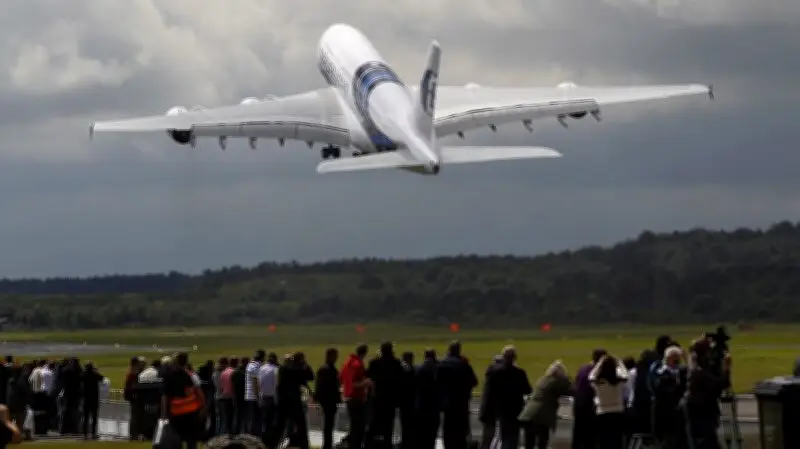
Airbus will inspect 16 A380 superjumbos after cracks were discovered on the wings of some aircraft, the European planemaker announced Wednesday.
Discovery and Immediate Response
The cracks were found during routine maintenance checks on several A380s operated by different airlines. Airbus said it notified all operators of the affected aircraft and issued a service bulletin recommending inspections within a specific timeframe. The company emphasized that the issue does not pose an immediate safety risk and that all A380s remain airworthy.
“We have identified a potential issue on a limited number of A380 wings,” an Airbus spokesperson said. “As a precautionary measure, we have asked operators to carry out inspections to ensure continued safe operation.”

Scope of the Inspection Campaign
The inspection covers 16 A380s, representing a fraction of the 251 superjumbos delivered since the program began. The affected aircraft are primarily older models that have accumulated significant flight cycles. Inspections are expected to take several days per aircraft and involve detailed checks of wing attachment points and structural components.
Airbus is working with aviation authorities, including the European Union Aviation Safety Agency (EASA), to coordinate the inspection campaign. The company stated that it is developing a permanent repair solution for any cracks found, which will be implemented in coordination with operators.
Impact on Airlines and Operations
Several major airlines that operate the A380, including Emirates, Singapore Airlines, and Lufthansa, have been notified. Emirates, the largest A380 operator with 123 aircraft, said it is assessing the impact on its fleet. Singapore Airlines confirmed it has received the service bulletin and will comply with the inspection requirements.
Analysts say the inspections could lead to temporary groundings of some A380s, potentially disrupting long-haul flight schedules. However, given the small number of aircraft involved, the overall impact is expected to be limited.
History of A380 Structural Issues
This is not the first time the A380 has faced structural concerns. In 2012, Airbus discovered cracks in the wing ribs of several A380s, leading to a major repair program. More recently, in 2019, the company addressed issues with wing skin panels on older aircraft. The current issue appears to be a new finding unrelated to previous problems.
Airbus has been gradually reducing A380 production due to weak demand, with the last delivery scheduled for 2021. However, the superjumbo remains in service with several airlines, particularly on high-density routes.
Industry Reaction and Next Steps
Aviation safety experts have praised Airbus for its proactive approach. “This is standard procedure in the industry,” said John Strickland, an aviation consultant. “Airbus is taking the right steps to ensure safety without causing unnecessary alarm.”
Airbus expects to complete the inspections within the next few weeks. The company will provide updates to operators and regulators as more information becomes available. Passengers are advised to check with their airlines for any potential schedule changes.