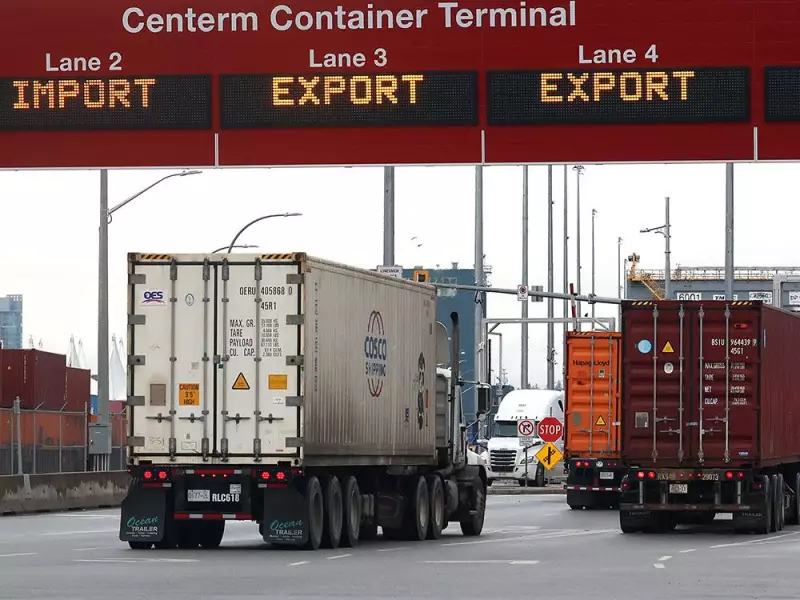
A new survey from the Bank of Canada reveals a dual reality for the nation's businesses: while a small but increasing number are successfully finding customers outside the United States, a majority are bracing for a period of staffing cuts rather than growth.
Trade Diversification Gains Traction Amid Uncertainty
According to the central bank's fourth-quarter 2025 Business Outlook Survey, persistent trade tensions are forcing a strategic shift. Nearly nine per cent of exporters reported slightly increased sales to non-U.S. markets, a notable jump from just 1.2 per cent in the third quarter. This move is a direct response to the pressure on the traditional cross-border trade relationship, with more than 52 per cent of exporters reporting decreased sales to the U.S.
"Businesses continue to cite uncertainty surrounding financial, economic and political conditions, slowing demand, and cost pressures as their most pressing concerns," the survey stated. The report highlighted that while firms face significant barriers to diversification—including specialized equipment needs, added regulatory costs, and transportation challenges—those already active in international markets are doubling down on those efforts with some success.

Staffing and Sales Face Downward Pressure
The survey painted a cautious picture for the labour market. With demand expected to remain soft, more than half of the businesses polled indicated that layoffs are more likely than new hires in the near term. The majority of firms plan to either maintain or decrease their current staffing levels.
This cautious stance comes as one-third of businesses reported a decline in sales volume over the past 12 months, a figure that sits above the historical average of one-quarter. The overall business sentiment remained subdued as 2025 drew to a close, though it showed slight improvement from the deep pessimism recorded in the second quarter when firms were grappling with escalating tariff threats from the administration of then-U.S. President Donald Trump.
A Glimmer of Optimism and Persistent Challenges
Amid the concerning data points, the Bank of Canada's survey identified a few positive signals. A greater number of firms reported seeing improved indicators than those seeing deteriorated ones. Furthermore, the share of businesses planning for a potential recession in Canada over the next 12 months eased to 22 per cent, down from 33 per cent and marking the lowest level reported in 2025.
The central bank noted that while businesses continue to feel the negative effects of tariffs and trade uncertainty—which have led to reduced spending in areas like insurance, advertising, and construction—they do not expect these pressures to intensify further. "While businesses continue to report negative effects... they do not expect these effects to worsen further," the report concluded, suggesting a plateau in the trade-related anxiety that has dominated recent quarters.