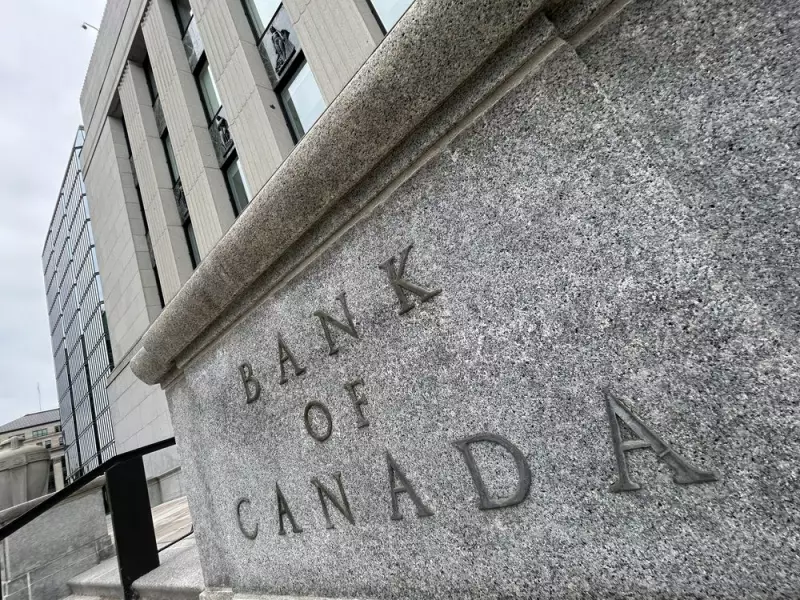
The latest inflation data from Statistics Canada has created a clear divide among economists regarding the Bank of Canada's next monetary policy decision. While the headline Consumer Price Index (CPI) accelerated to 2.4 per cent in December 2025 from 2.2 per cent in November, the central bank's preferred core measures unexpectedly cooled.
Core Measures Show Cooling Trend
Despite the headline increase, the Bank of Canada's core inflation metrics, which strip out volatile components, decelerated. The core trim measure slowed to 2.7 per cent from 2.8 per cent, while core median eased to 2.5 per cent. Both of these key indicators exclude the effect of taxes, providing a clearer view of underlying price pressures.
Statistics Canada attributed the jump in the overall CPI largely to the federal government's GST/HST holiday, which ran from mid-December 2024 to mid-February 2025 and temporarily lowered prices on a select group of items. This one-time fiscal policy measure created a statistical base effect that pushed the year-over-year comparison higher.

Market Bets on Rate Hikes Evaporate
The data prompted a significant shift in financial market expectations. Prior to the release, markets had increased bets that the Bank of Canada's next move would be a rate hike, with odds reaching as high as 80 per cent by year-end. Following the report, those bets were trimmed back to about 43 per cent, reflecting renewed uncertainty about the direction of monetary policy.
Economists were split in their forecasts. Citigroup Inc. correctly predicted the 2.4 per cent rise, while Toronto-Dominion Bank, Bank of Montreal, and Capital Economics Ltd. had forecast a 2.3 per cent increase. The consensus tracked by Bloomberg had called for inflation to hold steady at 2.2 per cent.
Economists Weigh In: Hold or Cut?
The conflicting signals within the data have led to divergent opinions among leading economists.
David Rosenberg, founder of Rosenberg Research & Associates Inc., argued forcefully against any rate hikes. In a note, he stated, "There is no case here for the Bank of Canada to even think about raising rates." He pointed out that monthly inflation has registered at a "non-threatening" 0.3 per cent seasonally adjusted rate for the past six months, and core inflation has not breached that level once during the same period.
Rosenberg highlighted that the six-month trajectory of inflation is down to nearly a two per cent annual rate, showing strong disinflation momentum. He also noted benign price pressures in a wide range of categories, including household operations, clothing, and transportation. With year-over-year real GDP barely above zero and full-time job creation slowing, Rosenberg believes the balance of risks leans toward more easing, not tightening, especially with ongoing threats from United States tariffs.
Stephen Brown, deputy chief North America economist at Capital Economics Ltd., echoed the sentiment that rate hike speculation should diminish. He emphasized the second consecutive below-target monthly gain in the CPI-trim and CPI-median measures as a key reason for the Bank of Canada to remain cautious. His analysis suggests the underlying economic momentum does not warrant a restrictive shift in policy.
The debate now centers on whether the Bank of Canada will look past the noisy headline number and focus on the cooling core measures, or if the overall acceleration will keep policymakers on hold for longer. The central bank's next interest rate announcement is awaited with heightened scrutiny as it navigates the path toward its two per cent inflation target.