As 2025 unfolded, the columnists of the Financial Post provided sharp analysis on the economic and political landscape facing Canada. The months of July and August were particularly rich with commentary, dissecting everything from transcontinental trade tensions to domestic policy failures and the future of national institutions.
Navigating a Tense Trade Relationship with the U.S.
The spectre of renewed economic aggression from the United States under President Donald Trump loomed large in summer 2025. Columnist Philip Cross, on July 9, offered a sobering reality check regarding calls for Canadian consumer boycotts of American goods. He argued that such actions, while emotionally satisfying, would likely fail to alter U.S. policy. Cross pointed out that trade is not a large enough component of the massive U.S. economy, Canada is not a dominant enough trading partner, and Trump himself has shown indifference to economic pain in sectors or regions he disfavours.
This analysis was met with a fiery rebuttal from William Watson on July 24. Watson took umbrage at the characterization of Canadian consumer boycotts as "nasty," framing them as a legitimate exercise of consumer sovereignty in response to hostile acts. He listed Trump's threats of annexation, high tariffs targeting Canadian auto, lumber, steel, aluminum, and copper, and the explicit goal of shifting production south as acts of economic aggression. Watson's column defended the right of millions of Canadians to voluntarily express their dissatisfaction through their spending choices.

Domestic Policy: Productivity, Spending, and Public Services
Beyond the border, columnists turned a critical eye inward. On July 11, Philip Cross challenged prevailing narratives about income inequality. He noted that the long-term parallel movement of labour productivity and real incomes undermines claims that workers have not benefited from economic growth. This observation, he contended, invalidates arguments that increased income redistribution is the sole method for improving worker incomes.
The role and efficiency of government were recurring themes. Matthew Lau, on July 16, questioned whether the federal government would finally address spending and finances with seriousness, asserting that if it wanted to cut, "there is no shortage of places to find savings." Jack Mintz, on July 18, drew a direct line between expanding governments and falling productivity, arguing that high tax rates harm the economy by funding unwanted public services.
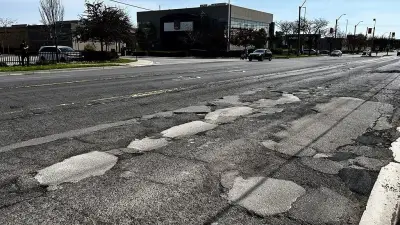
Specific institutions came under scrutiny. William Watson, on July 15, applied the concept of creative destruction to Canada Post, stating that its public purpose—to deliver mail—ceases to be required if people no longer send letters. He acknowledged the pain for workers but emphasized there is "no future in delivering mail that’s not being sent." At the municipal level, Matthew Lau (July 23) criticized Toronto City Hall for failing to provide services in both extreme heat and heavy snow, wondering under what conditions it could reliably operate.
Central Bank Accountability and Independence
A key debate emerged around the leadership of central banks. Philip Cross, on July 25, drew a critical distinction between threats to central bank independence in the U.S. and calls for accountability in Canada. He argued that Trump's threats to fire Federal Reserve Chair Jerome Powell were aimed at dictating policy, thereby jeopardizing the Fed's independence. In contrast, Conservative Leader Pierre Poilievre's promise to dismiss Bank of Canada Governor Tiff Macklem was framed as a demand for accountability after a failure to meet policy goals and misleading the public—a principle Cross supported for underperforming institutions.

These excerpts, part of a larger series reviewing the year's commentary, capture a period of significant economic uncertainty and robust debate among Canada's leading financial thinkers. The columns from July and August 2025 reflect deep concerns about external pressures, internal policy efficacy, and the fundamental structures of the nation's economic governance.