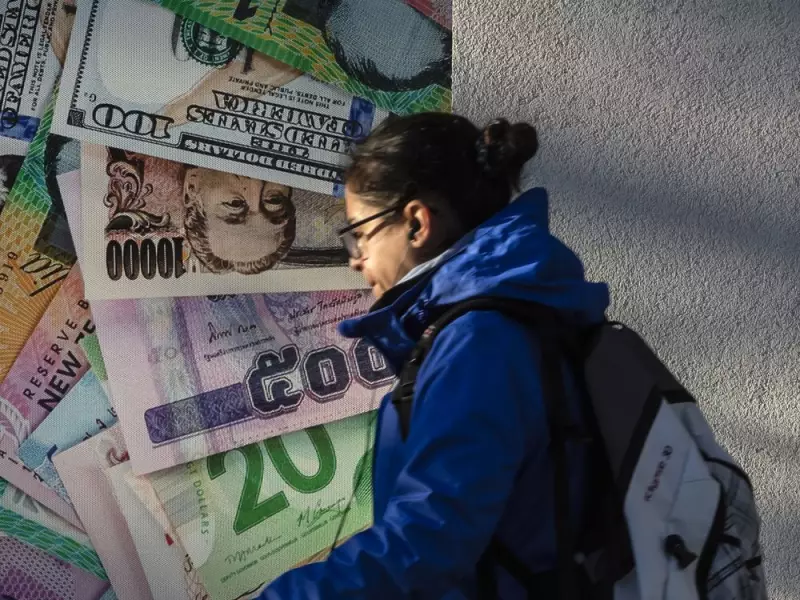
Emerging Markets and Gold Rally as Investors Shift Away from U.S. Assets
The financial landscape is witnessing a dramatic shift as emerging-market stocks, currencies, and precious metals like gold extend a powerful rally in early 2026. This surge is fueled by escalating tensions between the United States and Europe, which are weighing on the U.S. dollar and re-energizing global diversification flows. Investors are increasingly moving capital away from American holdings, a trend some analysts describe as a "quiet-quitting" of U.S. assets.
Record Gains in Emerging Markets
The MSCI Emerging Markets Index is heading for its fifth consecutive week of gains, marking the longest winning streak since May. This gauge has advanced an impressive seven per cent this year, starkly outperforming the S&P 500, which has managed only a one per cent gain. Asian technology shares have been a key driver of this rally, providing strong underpinning for the broader emerging-market upswing.
Other regions are also catching up with this momentum. The benchmark for Emerging Europe, Middle East, and Africa has risen on all five days of this week and is on course for its best month since 2020. Similarly, the MSCI EM Latin America Index of equities recently closed at its highest level since April 2018, indicating widespread strength across developing economies.

Geopolitical Factors and Dollar Dynamics
The so-called "Greenland tussle," even if temporarily mitigated, has revived critical questions about American exceptionalism and the dominant role of the U.S. dollar in global finance. This geopolitical friction has spurred funds from Europe to India to diversify away from U.S. Treasuries, adding significant impetus to the emerging-market rally.
Katie Koch, chief executive of TCW Group Inc., highlighted this trend in a recent interview, noting that investors are "looking to diversify away from U.S. assets, and I would kind of describe it as quiet-quitting of U.S. bonds." She emphasized that this shift is likely to be gradual rather than abrupt, with investors steadily seeking opportunities outside American markets.
Currency and Commodity Strengths
Risk sentiment received a notable boost after China's central bank set the yuan's daily reference rate stronger than the seven-per-dollar level for the first time in over two years. This move signals Beijing's tolerance for the currency's rally and has contributed to positive momentum in Asian markets.
In the commodity space, gold is trading just under US$5,000 an ounce, with significant institutional buying supporting prices. The National Bank of Poland, recognized as the world's biggest reported gold buyer, recently approved plans to purchase another 150 tons of the precious metal, underscoring the metal's appeal as a diversification tool.
Emerging-market currencies are also showing remarkable strength. The Brazilian real, along with the Colombian and Chilean pesos, have each gained more than three per cent this year, reflecting increased investor confidence in these economies.
Unprecedented Fund Inflows
Investors are pouring cash into emerging-market funds at a record pace, with the US$135 billion iShares Core MSCI Emerging Markets ETF attracting more than US$6.5 billion in January alone. This puts the fund on track for its biggest monthly inflow since its inception in 2012, highlighting the scale of the rotation out of U.S. holdings.
Oliver Harvey, a strategist at Deutsche Bank in London, noted in a research report that "EM assets are one of the key beneficiaries from stronger global growth. And when opportunities to express a positive growth view have been constrained in developed markets, the outlook is even more bullish for EM."
The rally is further supported by robust global growth, the ongoing artificial intelligence spending boom, political shifts in Latin America, and fiscal and monetary policy orthodoxy in much of the developing world. As diversification flows continue to reshape investment portfolios, emerging markets and alternative assets like gold are positioned to benefit from this structural shift away from traditional U.S.-centric allocations.