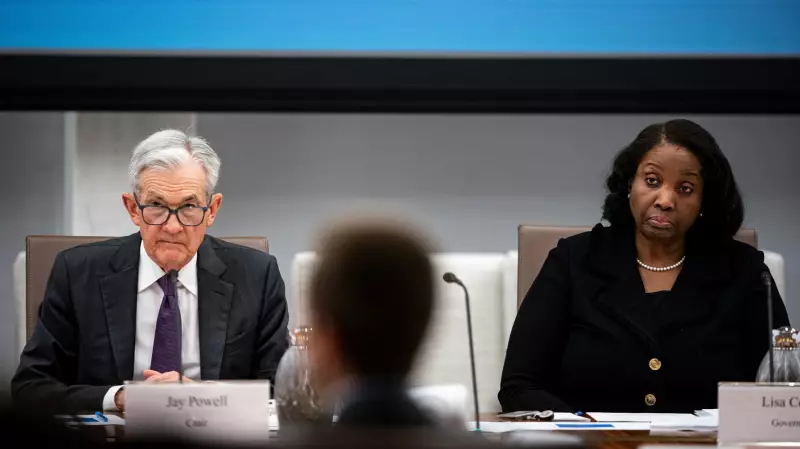
The independence of the United States Federal Reserve, a cornerstone of global economic stability, faces an unprecedented legal challenge this week. On Wednesday, the Supreme Court will hear arguments in the crucial case of Trump v. Cook, which centres on former President Donald Trump's attempt to remove Federal Reserve Governor Lisa Cook. This case represents a direct assault on the central bank's autonomy and its power to set interest rates free from political interference.
The Legal Battle and Political Pressure Campaign
The case stems from Trump's efforts to gain control over monetary policy. For months, Trump pressured the Fed to slash interest rates radically to fulfill campaign promises on inflation. When the institution refused, maintaining a measured pace of reductions, Trump sought to remove officials. Since Federal Reserve governors are protected from removal except for "cause," such as misconduct, Trump lacked a direct path.
The Trump administration's strategy became clear when the Department of Justice obtained an indictment against Governor Lisa Cook on mortgage-fraud charges. Legal experts and Cook herself have labelled the charges as fabricated, a pretext for removal. Cook sued, arguing the allegations didn't meet the standard for "for-cause" removal and that she was denied due process. Two lower courts sided with her, leading to the Trump administration's appeal to the Supreme Court.

This legal manoeuvre is part of a broader pressure campaign. Just last Sunday, Fed Chair Jerome Powell revealed he had been served grand jury subpoenas and threatened with criminal indictment over cost overruns in a building project. Powell fought back, stating the Justice Department's claim he lied to Congress was a "pretext" and part of the administration's ongoing pressure to influence interest rates.
High Stakes for the Economy and Democracy
The implications of a ruling in Trump's favour are monumental. At its core, the case asks if a president can weaponize the Justice Department to fabricate criminal charges against independent agency officials to seize control. Senator Elizabeth Warren (D-Mass.) warned that a Trump takeover would allow the Fed to set rates purely to "juice the economy" ahead of elections, ignoring inflation risks. She further cautioned it could turbocharge bank deregulation, leading to more bailouts and financial crashes.
Beyond economics, experts warn of profound democratic erosion. Lev Menand, a Columbia Law professor, explained that control of the Fed's vast powers—to lend money, buy assets, and approve bank mergers—could allow a president to fund priorities without Congress, evading constitutional checks. Rohit Chopra, former head of the Consumer Financial Protection Bureau, posed critical questions: Would banks that don't lend to White House allies lose access to Fed credit? Could they be "de-banked" for non-cooperation?
A Pattern of Autocratic Tactics
Legal scholars draw direct parallels to modern autocracies. David Driesen, a constitutional law professor at Syracuse University, called the targeting of technocrats like Powell and Cook "an autocratic move" on the "extreme edge." He noted that in countries like Turkey, Hungary, and Venezuela, leaders gained control of central banks through legal changes, not by prosecuting sitting officials.
The results in those nations were disastrous. After constitutional amendments, Turkish President Recep Tayyip Erdogan removed central bank governors who resisted his unorthodox economic views. Venezuela's Hugo Chavez seized control of its central bank in 2007. Both cases were followed by sky-high inflation as leaders pumped the economy for short-term political gain.
While past U.S. presidents, like Richard Nixon, have pressured the Fed, none have shown such a determined effort to unseat its members through criminal investigations. Cristina Bodea, a Michigan State University professor, stated, "We have never seen this in the United States." She argued that Trump's aggressive tactics don't make economic sense unless viewed as part of a "broader erosion of the rule of law."

The Supreme Court's decision in Trump v. Cook will resonate far beyond one governor's position. It will either reaffirm the bedrock principle of central bank independence—a key guardrail against political business cycles and inflation—or it will greenlight the use of prosecutorial power as a tool for political control, setting a dangerous precedent for the future of American economic governance and democracy itself.