Canada is missing valuable opportunities to support its homegrown businesses by failing to invest strategically in developing countries, according to geopolitical experts. They argue that public and private investment in building industries abroad can create new revenue streams for Canadian companies while improving lives in those nations.
The Intersection of Aid and Trade
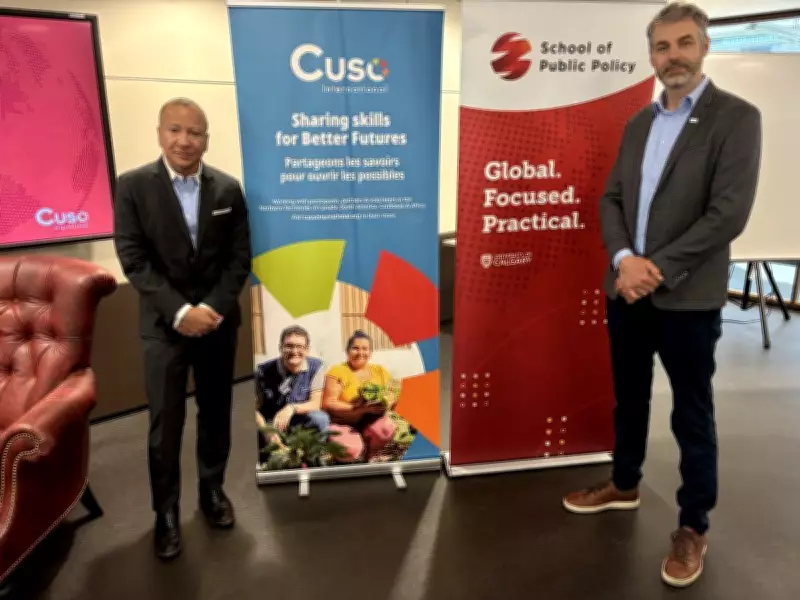
This concept of aligning Canadian aid and trade was the focus of a discussion at the University of Calgary featuring Carlo Dade, director of international policy at the university, and Nicolas Moyer, CEO of the international development non-profit CUSO. The talk explored how private organizations can help strengthen local governments in foreign countries and the challenges non-profits face in securing government funding to support Canadian companies entering those markets.
“You can’t import progress,” Moyer said during the Tuesday event. “You’ve got to help people deliver that for themselves.” He emphasized the critical role of the private sector in development, noting that access to employment and dignified work is transformative for vulnerable populations.

Balancing Aid and Private Investment
A key tension discussed was the long-standing view that development assistance should solely benefit aid recipients, versus the incentives for private investment. Moyer argued that while aid dollars must support the most vulnerable, they can also be used at the intersection of other societal elements, including the private sector.
“We have to recognize the place of the private sector in the development discourse,” Moyer stated. “It’s such a critical part of agency for individuals to be able to have access to employment, to dignified work – it’s probably the most transformative thing that is at all possible for anyone who’s in a vulnerable context.”
Geopolitical Context and Renewed Interest
Geopolitics in Canada has gained renewed attention amid ongoing tensions with the United States, its closest economic and military ally. Last year, the U.S. president briefly suggested annexing Canada, though he later backed away. However, he imposed significant tariffs on Canadian industries before exempting those covered by the USMCA free trade agreement.
The volatility of the Trump administration prompted Prime Minister Mark Carney to deliver a speech at Davos, which was praised globally. He declared the end of the old geopolitical order and urged middle powers to engage on the world stage before they are “on the menu.”
Carney has since visited several countries to build support and trade agreements, partnering with China, India, Japan, Australia, and the European Union on issues like canola, uranium, energy, and critical minerals.
The experts stressed that Canada must adapt its development and economic partnerships to thrive in a changing world, leveraging both public and private resources for mutual benefit.