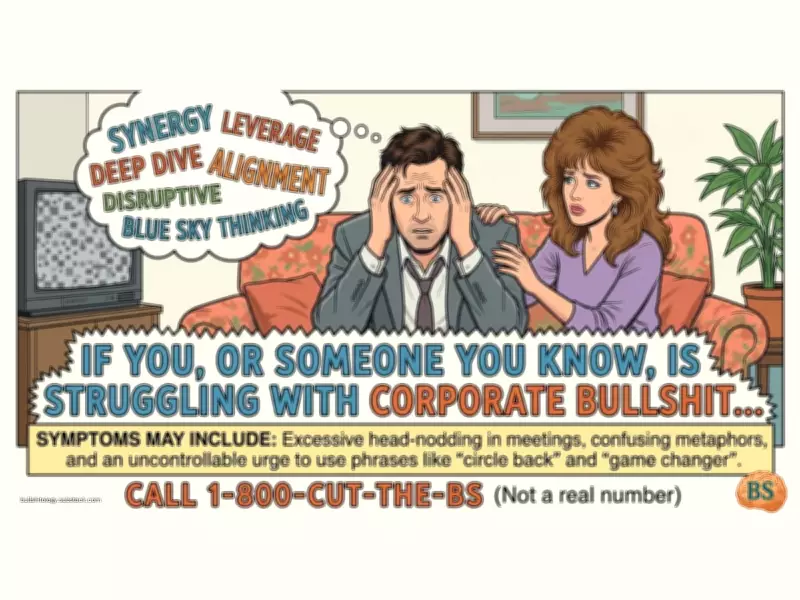
The Corporate Buzzword Epidemic: When Language Becomes a Liability
For over two decades, corporate and political communications have been infiltrated by buzzwords that promise transformation but often deliver confusion. At the forefront of this linguistic trend stands "resilience"—a term that originated in healthcare and psychology to describe the ability to adapt to adversity and bounce back from difficult experiences.
From Resilience to Transcendence: The Evolution of Corporate Jargon
As far back as 2015, critics were already questioning the expanding use of resilience terminology. A New York Times Magazine article titled "The Profound Emptiness of 'Resilience'" highlighted how nearly every organization had incorporated the concept into mission statements and strategic documents. Despite this early skepticism, resilience language swept through corporate structures and government bureaucracies, becoming a staple in both internal and external communications.
Corporations deployed resilience rhetoric to address market crashes, the COVID-19 pandemic, and oil crises. From major banks to global consulting firms, resilience became framed as an imperative component of corporate governance. McKinsey & Company notably advised that when times get tough and CEOs face uncertainty, many "are thinking more than ever about building resilience."

Politicians from Prime Minister Mark Carney to Ontario Premier Doug Ford adopted the resilience cliché, further embedding it in public discourse. Yet the precise meaning remained somewhat uncertain, creating what critics describe as linguistic ambiguity in organizational communication.
The Next Buzzword: Transcendence Takes Center Stage
Now, according to World Business Forum materials, resilience is set to be replaced by a new driving concept: transcendence. The forum's brochure declares that resilience is "no longer enough" for 2026. Organizations must do more than withstand storms—they must "reach behind them and transcend." This new paradigm demands what the materials describe as "a relentless pursuit of potential" and organizations that are "deeply rooted in a strong purpose, yet limitless in their ability to innovate and scale."
This shift raises important questions: Is transcendence a genuine step forward, or does it represent an acknowledgment that a decade of pursuing resilience may not have produced the corporate transformations and results that organizations sought? Could this simply be another piece of corporate jargon replacing an older one?
Scientific Research Exposes the Consequences of Corporate Jargon
New research from Cornell University psychologist Shane Littrell provides scientific insight into this phenomenon. In his paper titled "The Corporate Bullshit Receptivity Scale: Development, validation, and associations with workplace outcomes," Littrell reports on comprehensive testing conducted with corporate employees to determine whether what he terms "corporate bullshit" actually proves effective in organizational settings.
The findings reveal significant negative consequences when organizations rely heavily on buzzword-heavy communication. According to Littrell's research, the "unfettered spread of corporate bullshit in an organization can backfire in several ways." High-quality workers may choose to leave companies that employ misleadingly abstruse, buzzword-heavy speech norms. Meanwhile, remaining employees may misinterpret important directives or feedback delivered in what the study describes as an "overly stylized or 'bullshitty' manner."
The Workplace Impact of Linguistic Ambiguity
Littrell's research suggests that corporate efforts to shape organizational futures through creative language and vague concepts may represent a fundamentally flawed strategy. Rather than inspiring employees or clarifying organizational direction, such language can create communication breakdowns and drive away valuable talent.
The study's implications extend beyond individual buzzwords to question the broader corporate tendency toward what some observers describe as linguistic inflation—the constant search for new terms to describe organizational challenges and aspirations without necessarily changing underlying realities.

As organizations consider adopting the latest buzzwords like transcendence, Littrell's research serves as a cautionary reminder about the potential workplace consequences of corporate jargon. The findings suggest that clear, direct communication may prove more effective than the latest linguistic trends in fostering genuine organizational improvement and employee engagement.