Bitcoin has traditionally been marketed as providing a unique 24-hour, real-time indicator of global risk, a feature that sets it apart from conventional financial markets. However, recent geopolitical events have delivered a stark reality check to this long-held promise, revealing significant shifts in how digital assets respond to international tensions.
Bitcoin's Erratic Response to Geopolitical Stress
When news broke of United States military strikes on Iran, Bitcoin initially fell sharply, reflecting immediate market anxiety. Yet the cryptocurrency's subsequent behavior proved anything but straightforward. It traded erratically throughout the weekend before ultimately climbing higher by Monday, eventually surpassing its pre-attack valuation levels. This round-trip movement left little lasting evidence of either sustained fear or capital flight, challenging the notion that Bitcoin consistently serves as a reliable barometer of geopolitical risk.
The New Reality of Crypto Market Dynamics
This muted response reflects broader changes within cryptocurrency markets. After plummeting approximately 50% from its peak, Bitcoin has been confined to a narrowed trading range between US$60,000 and US$70,000. Much of the excessive leverage that characterized previous market cycles has been eliminated following October's crypto market meltdown. Retail participation has diminished significantly, trading flows have weakened, and with positioning now lighter, fresh geopolitical shocks produce less dramatic market follow-through than in previous years.

The Real Signal Emerges from Derivatives Markets
The clearer read on geopolitical risk didn't come from Bitcoin's price action itself, but rather from positioning within cryptocurrency trading platforms. On Hyperliquid and similar venues, derivatives known as perpetual futures tied to traditional assets like oil, gold, and silver moved decisively higher over the weekend. These movements echoed the classic rotation into traditional safe-haven assets that typically occurs when global markets reopen after geopolitical events.
The direction of these trades was predictable—energy prices rising, precious metals in demand—though trading volumes remain substantially smaller than Bitcoin's own market. Nevertheless, their growing presence on crypto-native platforms represents a significant development in market structure.
The Migration Toward Traditional Asset Derivatives
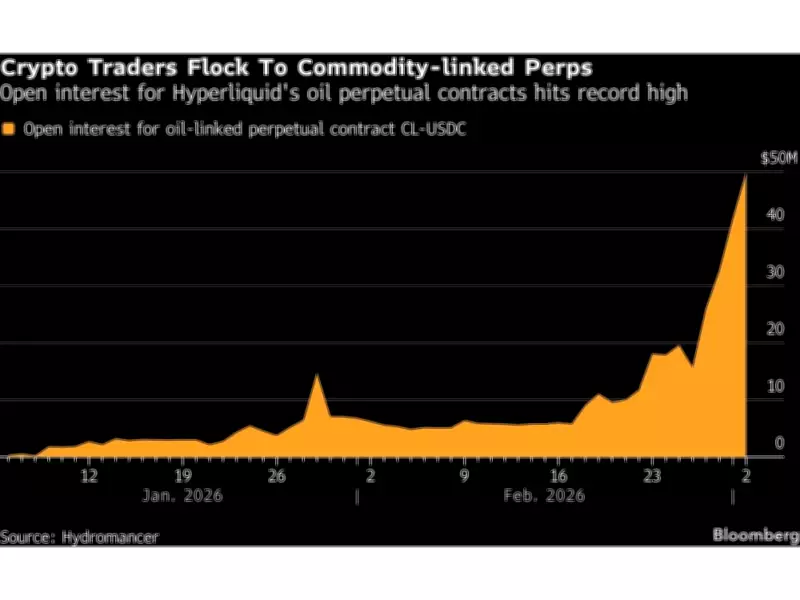
In recent months, as gold and silver experienced sustained rallies, cryptocurrency traders have increasingly migrated toward commodity-linked contracts. These instruments allow them to chase momentum or express macroeconomic views without leaving their preferred crypto trading environments. Open interest in these products has risen steadily, even if absolute volumes remain modest compared to established markets.
According to data compiled by Hydromancer, trading volume for a silver-linked perpetual contract reached a substantial US$28.28 billion on Hyperliquid. Meanwhile, an oil-linked perpetual contract that became available in early January has seen nearly US$400 million in trading volume since its introduction.
Crypto Platforms as Price Discovery Venues
"Hyperliquid served as a price discovery mechanism over the weekend," noted Karim Dandashy, an over-the-counter trader at Flowdesk. He observed that open interest in futures linked to traditional assets reached "a new all-time high" during the period of geopolitical tension.
Not all of this trading activity reflects sophisticated macroeconomic positioning. Some portion is plainly speculative—high-beta traders rotating into whatever assets show momentum. Yet this speculative behavior itself represents part of the market's evolution. Cryptocurrency venues are increasingly becoming places where traders speculate not just on digital tokens, but on oil, precious metals, and equity indexes as well.
Bitcoin's Diminished Dominance in Stressful Moments
Bitcoin's reaction to the U.S.-Iran tensions underscored this fundamental shift. The flagship cryptocurrency no longer monopolizes trader attention during moments of geopolitical stress. Instead, it has become just one instrument in a broader speculative toolkit—and not always the most active one during crisis periods.

The Bitcoin rebound that occurred on Monday also tracked a broader stabilization in traditional financial markets. After an initial slide, global stocks pared their losses, fluctuating as the U.S. dollar and gold climbed while oil prices surged. This coordinated movement helped ease some immediate pressure on risk assets across multiple asset classes.
Bitcoin gained as much as 6.7% to reach US$70,099 on Monday, recovering from a weekend low around US$63,000. This recovery mirrored similar stabilization patterns in traditional markets, further blurring the lines between cryptocurrency and conventional financial asset behavior during periods of international tension.