
Spring economic update gains already spent, CPA warns
CPA Canada says over 80% of new revenue in the spring economic update is already allocated, leaving little for growth. Taxpayers Federation and unions react.


CPA Canada says over 80% of new revenue in the spring economic update is already allocated, leaving little for growth. Taxpayers Federation and unions react.

Save 60% on AncestryDNA test kit at Amazon, now $40. Discover your ethnic origins from 2,600+ regions with easy at-home saliva test.

Statistics Canada reports real GDP grew 0.2% in February, signaling modest economic growth amid ongoing challenges.

Canada's GDP grew 0.2% in February, with annualized quarterly growth estimated at 1.7%. The economy shows steady expansion amid global uncertainties.

Shared lists with real-time sync. No signup needed — just open and shop together.
Recommended
Statistics Canada will release GDP figures for February and an early estimate for Q1 today, providing key insights into the Canadian economy's performance.

Statistics Canada reports that more than one in ten Canadians are living below the poverty line, highlighting ongoing economic challenges.

Despite record highs in the S&P 500, earnings reports reveal growing damage from the Iran conflict, impacting sectors like industrials, materials, and energy.

The US Federal Reserve is expected to keep interest rates unchanged as Chair Jerome Powell approaches the end of his term, with markets watching for signals on future policy.

Randall Bartlett discusses Canada's top G7 fiscal standing, inflation risks, and Bank of Canada moves amid population shifts.
Shared lists with real-time sync. No signup needed — just open and shop together.
Recommended
Seven Tim Hortons locations in Surrey and Maple Ridge will donate Smile Cookie proceeds to The Vancouver Sun's Adopt-A-School program, aiming to raise $60,000-$75,000 in 2026.

A Fox News poll reveals 56% disapprove of Trump's management, and Democrats lead on the economy for the first time since 2010, signaling trouble for Republicans in midterms.

Prime Minister Mark Carney stated that Canada faces more than just 'irritants' in trade relations with the United States, signaling deeper tensions ahead of the CUSMA deadline.

Richard Ciano argues that banning surveillance pricing is unworkable and fails to address real harms, as retailers can easily circumvent rules with coupons.

Statistics Canada reports a sharp 7.8% increase in fresh vegetable prices, driven by rising oil costs, global uncertainty, and geopolitical tensions. Inflationary pressures are mounting across the nation.
Shared lists with real-time sync. No signup needed — just open and shop together.
Recommended
Canada's annual inflation rate accelerated to 2.4% in March, driven by a record monthly increase in gasoline prices. Economists note it could have been worse, with Canada ranking 28th among advanced economies.

A new survey reveals nearly 80% of Canadians report their cost of living exceeds their income, with Atlantic Canada residents most concerned about financial struggles.

Canada's inflation rate climbed to 2.4 percent in April 2026, driven by a sharp spike in fuel prices. The surge is impacting airlines, consumers, and broader economic policy debates.

A new Gallup poll reveals 59% of Americans think they pay too much in taxes, with historical comparisons showing persistent anti-tax sentiment. Despite lower rates than many OECD countries, public frustration remains high.

Economist Henrietta Treyz warns that soaring gas prices from Trump's Iran war could soon lead to higher food costs, contrasting the current economy with Biden's era of prosperity.
Shared lists with real-time sync. No signup needed — just open and shop together.
Recommended
Canada's inflation rate climbs to 2.4% as rising fuel prices and global instability drive up costs for essentials like food and gas, with little relief in sight for consumers.

Canada's inflation rate rose to 2.4 percent in March, with fuel prices being the primary driver. The increase highlights ongoing economic pressures as fuel costs impact various sectors.

Statistics Canada reports inflation figures as the Iran war continues, with airfares increasing for the first time in nearly two years due to soaring jet fuel prices, impacting consumer spending.
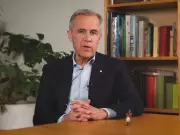
Mark Carney's recent 'fireside chat' video attempts to reassure Canadians amid economic turmoil, but critics argue it offers little substance as inflation soars and investment stalls ahead of crucial U.S. trade negotiations.

Chief economist Pedro Antunes discusses rising CPI data, highlighting energy costs as a key driver of inflation, with broader economic implications for Canadian households and policy.
Shared lists with real-time sync. No signup needed — just open and shop together.
Recommended
A Bank of Canada survey reveals firms' outlooks were improving prior to the Iran conflict, with inflation expectations easing and hiring plans increasing.

While Prime Minister Mark Carney points to improving indicators, housing and food costs continue to strain Canadian households, with living standards remaining stagnant.

Statistics Canada reports annual inflation rose to 2.4% in March, driven by soaring fuel prices following Iran's Strait of Hormuz closure. Food inflation decreased to 4%.

Statistics Canada reports inflation accelerated to 2.4% in March, up from 1.8% in February, with fuel prices surging over 21% due to geopolitical tensions.

Canada's inflation rate jumped to 2.4% in March, driven by rising oil prices from the Iran conflict, according to Statistics Canada. The increase marks a significant shift in economic pressures.
Shared lists with real-time sync. No signup needed — just open and shop together.
Recommended
Canada's inflation rate increased to 2.4% in March, driven by rising costs in key sectors. This uptick signals ongoing economic pressures for consumers and businesses nationwide.
