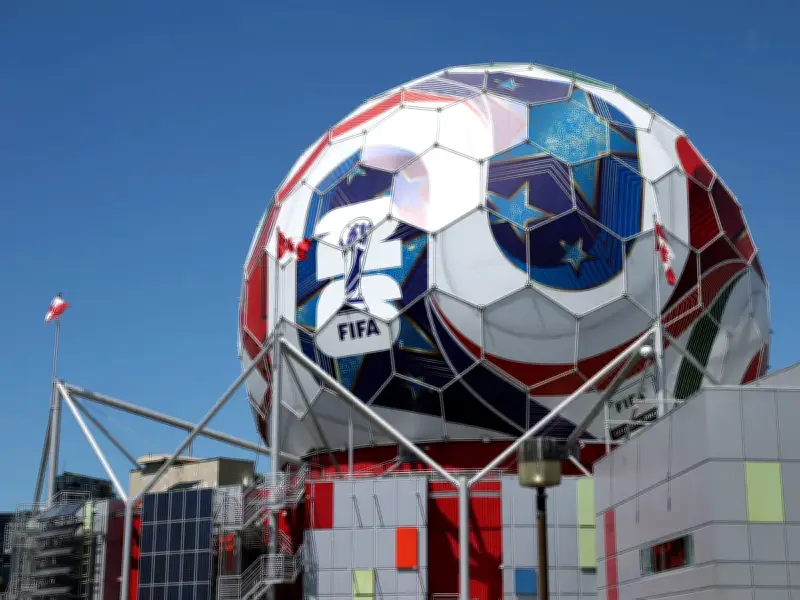
Vancouver and Toronto are co-hosting the World Cup, which might boost sales and expectations about a better Canadian economy. But a recent study suggests that any economic bounce from the tournament is likely to be small and temporary.
Study finds limited economic impact
Jonas Hennrich and Klaus Wohlrabe of Germany's Ifo Institute for Economic Research published a paper in June 2026 that examines whether football championships improve business confidence and lift the economy. Their study analyzes data from 1991 to 2024, covering eight World Cups and nine European Cups, with almost 18,000 European companies and 2.2 million observations.
The researchers found that business sentiment does not change in the months surrounding a tournament. However, expectations do shift: in the six months before a tournament, expectations are slightly more pessimistic, as companies have not yet anticipated the event's impact. Two months before the event, expectations pick up, but the effect is short-lived—six months after the tournament, expectations return to their original level.

Why the economic boost is limited
Underwhelming results should not be surprising. People who spend more on World Cup tickets, merchandise, and services will likely spend less on other consumption goods, assuming their household budgets remain the same. The only way for consumption to increase overall is for incomes to grow as demand for services to support World Cup activities pushes up wages.
John Maynard Keynes is credited for the idea that “animal spirits” are an important factor in business decisions. As he wrote in his 1936 classic, The General Theory of Employment, Interest and Money, “Most, probably, of our decisions to do something positive … can only be taken as a result of animal spirits—of a spontaneous urge to action rather than inaction, and not as the outcome of a weighted average of quantitative benefits multiplied by quantitative probabilities.” What’s key are the expectations and emotions consumers and businesses harbour when making decisions.
Previous studies show mixed results
A slew of studies on the economic impact of big football tournaments has shown mixed results, ranging from nil to a three per cent increase in consumer spending. The Ifo Institute's findings align with this pattern, suggesting that any boost is modest and temporary.
For host countries like Canada, which bear most of the costs and disruption of a tournament, the economic benefits are even less clear. The study includes host countries in its analysis and finds that expectations among businesses in host nations also follow the same pattern of a short-lived uptick before the event.